


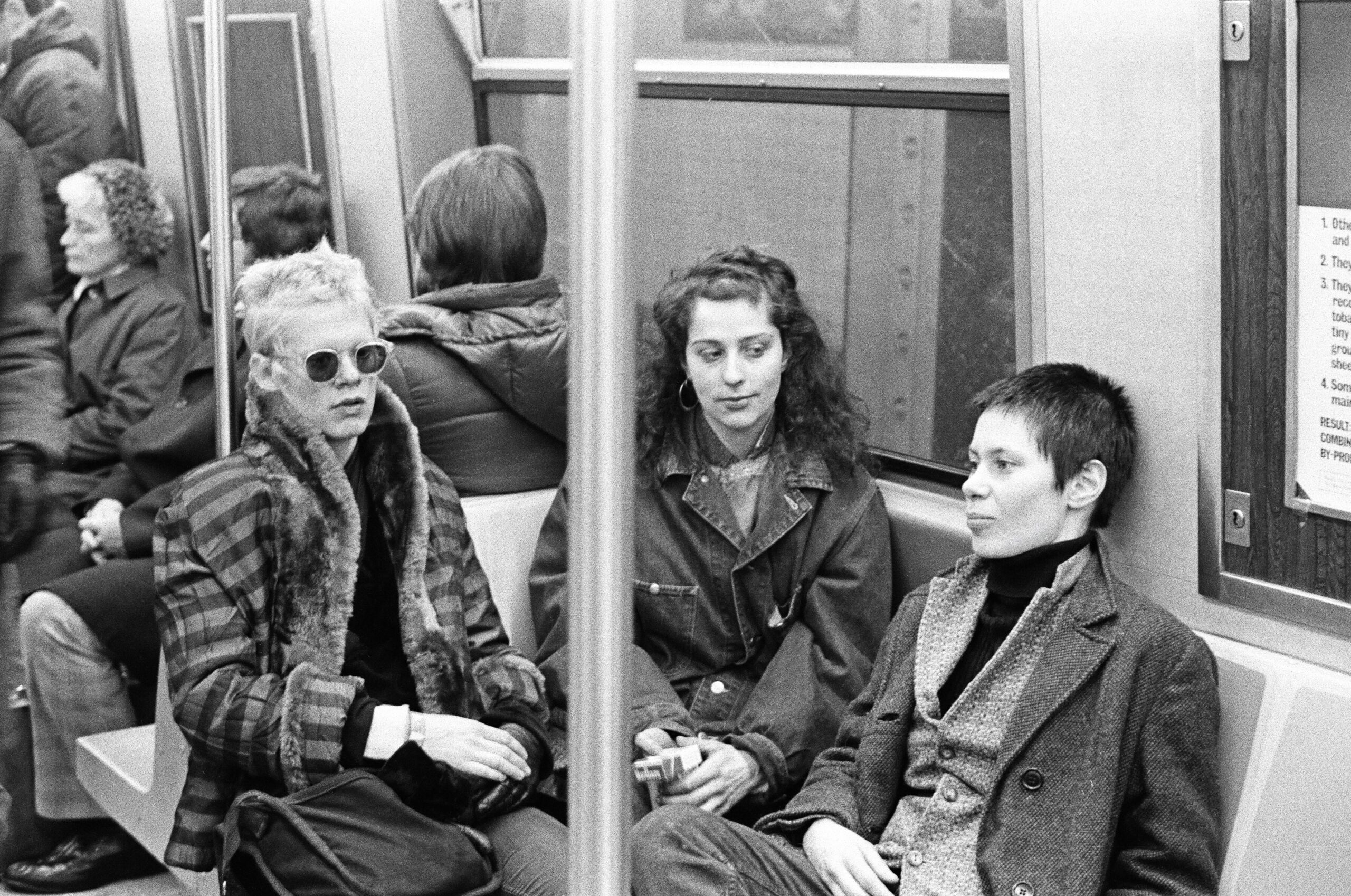






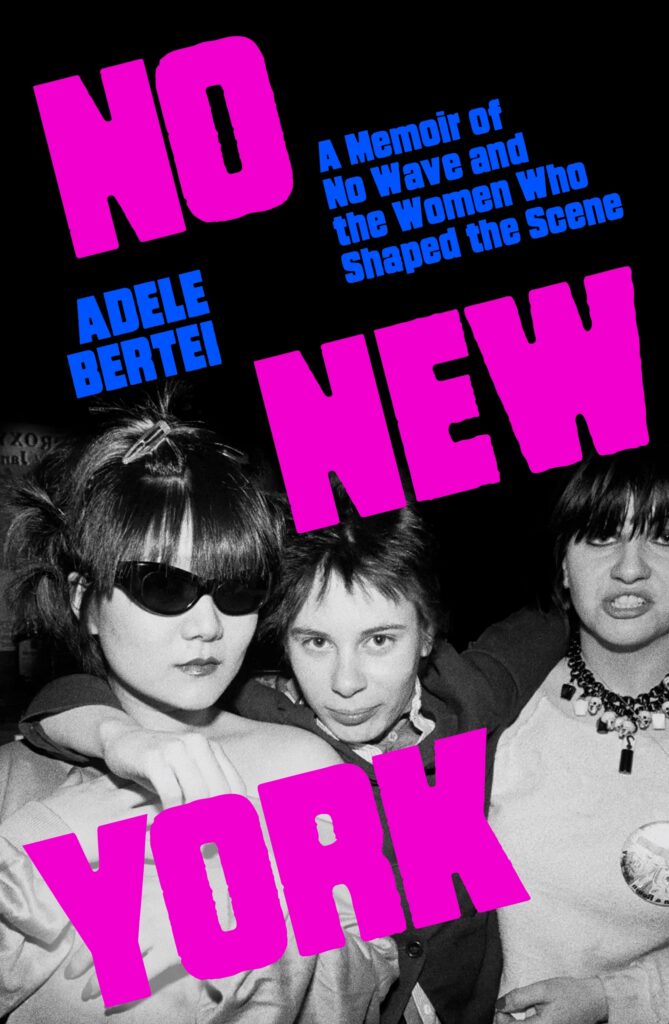
So many books have been written on the art and music of New York City in the late 1970s and early 1980s that one imagines the texts on the much-romanticized period, stacked end to end, could reach the top of the Empire State Building. Or could at least be placed like bricks to form life-size recreations of the facades of CBGB and the Mudd Club. The themes of these nostalgic books have become New York City’s greatest hits; like decades-old pop melodies heard from the windows of passing cars, we already know the words by heart. Bankrupt city! Burned-out buildings! $75-a-month apartments on the Lower East Side! Also familiar to us now is the story of how the era’s avant-garde, under the influence of Antonin Artaud’s theater of cruelty, internalized this desolation of the city’s streets and refashioned the collapse of society into a raw, uncompromising aesthetic, birthing an abrasive and aggressively anti-commercial movement of music and art called No Wave. Adele Bertei’s vividly written, diaristic new memoir, No New York: A Memoir of No Wave and the Women Who Shaped the Scene, emerges from this context as a surprising, true achievement: a thrilling—and staunchly feminist—rewrite of that fabled era that helps us to see it with fresh eyes at last.
Adele Bertei is, of course, a legend, the former keyboard player of the groundbreaking frenetic, promo-free jazz-funk combo the Contortions and the star of Born in Flames, Lizzie Borden’s cult classic film of women-led revolution. No New York places her firmly at the center of the scene’s action. Bertei’s proximity to the era’s luminaires is uncanny. (Burroughs, Basquiat, Sid Vicious, Madonna, and many more make walk-on cameos.) She recounts tales of having sex with Nan Goldin, partying with Lester Bangs, and jamming with Lydia Lunch—all just in the book’s first dozen pages. But while other histories of the movement, like No Wave by Marc Masters and No Wave: Post Punk. Underground. New York. 1976-80. by Thurston Moore and Byron Coley, have offered comprehensive accounts of the movement’s origins featuring a similar cast of characters, Bertei writes that her true ambition for the book is to make the case that No Wave was “the first significant international movement of women artists.” Contrasting the darkness and self-destruction found in the streets of the decaying city with the less familiar story of brilliant women finding connection with one another in the ruins, Bertei links artists like herself, Lunch, Goldin, Borden, Kathy Acker, Barbara Kruger, Kathryn Bigelow, Kiki Smith, and others, while tracing out these artists’ broader, and until now unacknowledged, efforts to invent together a new world.
Bertei is hardly nostalgic herself; No New York is her fifth book in the past six years, and she has no plans to slow down. She tells me she is beginning work on a biography of Sinéad O’Connor for Beacon Press and that she will direct her first play next year at UCLA’s Nimoy Theater—a live performance of the musical adaptation Acker made with the post-punk band the Mekons of her final novel, Pussy, King of the Pirates. I managed to catch up with Bertei for an hourslong conversation via FaceTime in late May.
Erica Dawn Lyle: I told someone I was reading your book, and they asked me what No Wave music sounds like. I thought of the wonderful line you wrote to describe the guitar playing of Constance Burg from Mars: “She played guitar like a drunken reptile dancing on olive oil.”OK! No Wave sounds like that! Do you credit particular women like Burg with the creation of the sound that we associate today with No Wave?
Adele Bertei: Absolutely. I think Alan Vega, with Suicide, was probably the instigator of the No Wave noise movement. But after that I think I would just have to speak of some of the women musicians I knew in this scene. Pat Place, Lydia Lunch, Ikue Mori, Lizzy Mercier. There were so many interesting women playing music in the No Wave scene.
EDL: The central thesis of No New York is that No Wave was the first significant women-led international art movement. I haven’t seen anyone discuss No Wave like this before.
AB: One of the reasons I wrote the book was because I wanted to center the importance of women and frame [No Wave] as the revolutionary moment in time and place that it was. There have been great books written about No Wave—the book by Thurston Moore and Byron Coley, or Mark Masters’s book, for instance—and they do give credence to the women. But if you look at art movements through history, there’s never been one where the women were so important and where women came from all over the world. Women came from Europe, from Japan, from all over America, to be in one place in one moment of time.
EDL: What also feels new to me in your book is the idea that No Wave is not just this musical spin-off of punk but is instead this movement composed of all of the groundbreaking underground music, art, writing, and cinema made together by women during that time and place.
AB: We were making music that wasn’t melodic at all but instead was based more on the ideas of Antonin Artaud’s theater of cruelty. But at the same time, you had Kathy Acker rewriting the canon in this transgressive way. Guitar players were making films, and filmmakers were playing in bands …
EDL: Yes, there was so much created against the backdrop of this city that was falling apart at that time. It seems there was so much of a life-during-wartime kind of improvisatory feeling then. You really vividly impart this tremendous sense of discovery for you and others who were making this new thing together in real time.
AB: The women I was meeting at the time all acted from this unstated question: “What if?” What if we ignored all ideas about gender and genre and really just did what we wanted to do? We instilled in each other this sense of freedom and rebellion and revolt. We were very anti-commodification, very anti-label, very anti-identity-politics. There was just a real freedom and a fluidity of who you could be from one day to the next.
EDL: One of the things that’s so valuable about a memoir like yours is the way that it helps us revisit a moment when something new didn’t yet have a name or wasn’t yet understood to be what it later came to be known as. You describe all of these women artists working across different genres. At the time, how much was there a sense among you all of belonging to a movement?
AB: I don’t think at the time, while we were inside of it, that we really thought of it as a movement. It was more like this frisson in the air, the feeling you could do whatever you wanted to do.
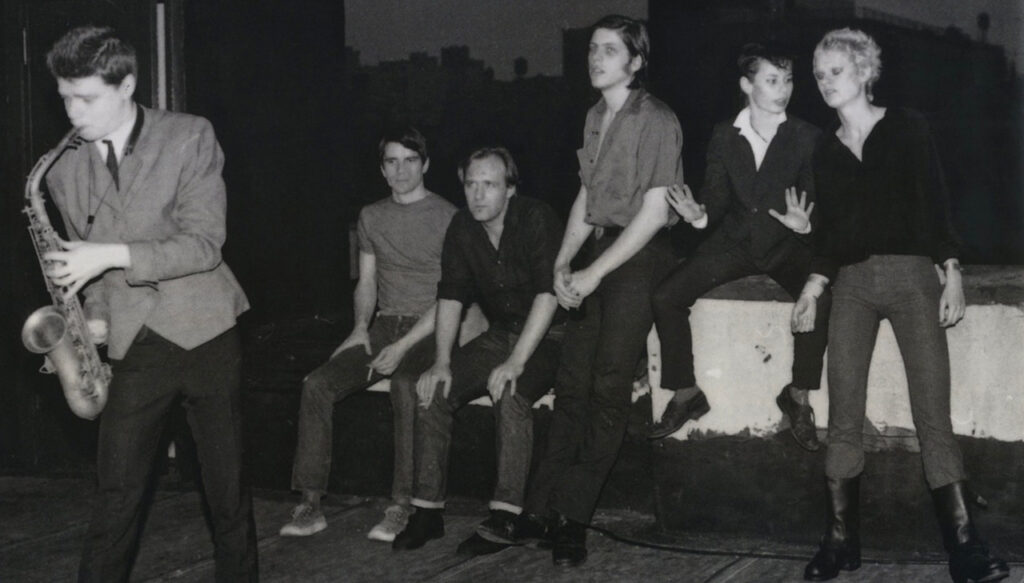
EDL: It’s interesting because punk is so often credited with having broken open the culture in the ’70s and with ushering in the freedom to do whatever one wanted to. But you describe a widespread perception in New York at the dawn of the ’80s that punk rock was actually a codified thing that had already become pretty limited. What was the distinction at the time between punk and the new culture you were all making together?
AB: Compared to punk, No Wave music was very noise-based. No Wave was polyrhythmic. It was about moving away from these three-chord progressions and these melodic choruses that were, if you think about it, actually pretty pop.
EDL: Why do you think No Wave has not really been seen this way, as a specifically women-led movement?
AB: [Laughs.] Mainly because women haven’t written about it! But No Wave really had to do with repressed female rage. We were finally going to express our rage through our instruments, through our lyrics, through our way of presentation. That was very important. Lydia Lunch was just explosive with rage.
EDL: In the book’s first pages, you describe your arrival in New York City. Leaving Port Authority, you do not go straight to CBGB or Max’s—the meccas of the subculture—but to a literal church, St. Patrick’s Cathedral. You write, “Connection is the holy antidote to a starless sky.” You return to this theme of light and dark in the book—this dichotomy between the lightness of trying to find connection and to make a new world through art in opposition to the dark energy of the decaying city and the self-destructive aspect of the hard drugs that were part of the scene as well. The spirit of improvisation and fearlessness you describe seems a corollary to some of the bleakness of New York City in that era.
AB: Survival was a creative act then. It was reflective of how society was collapsing, because we lived in the collapse. There’s such great footage of that scene and it’s all, like, people walking through literal rubble. Like in Vivienne Dick’s films, there is Lydia Lunch, picking through the ruins. But that also created a certain freedom.
EDL: This kind of post-apocalyptic freedom is transposed into a sort of fantasy prelapsarian feminist utopia in the movie Cave Girls, made by artist Kiki Smith, collaboratively with many other women artist and non-artist friends in the beginning of the ’80s. In the book, you also connect Smith’s work with No Wave.
AB: Ah, Cave Girls! Yes! You know that film?!
EDL: Yes, I love that movie! Instead of the rubble, you see this lost tribe of women from millions of years ago who are living this kind of feral communal existence without men at, like, this waterfall in suburban New Jersey! [Laughs.] Pat Place’s band, the Bush Tetras, provides the soundtrack, of course. The lost women are described as “pre-thought.”
AB: I love Kiki’s work! It’s so grounded in female myth and nature. She’s just amazing.
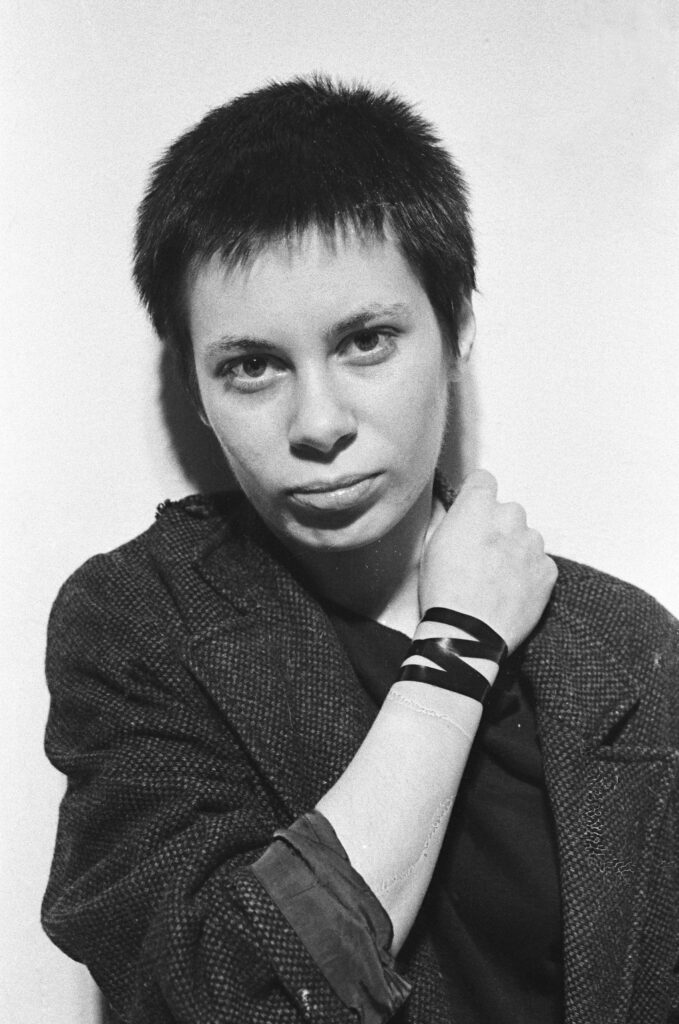
EDL: You were one of the eight women featured inVivienne Dick’s 1978 film, Guerillère Talks, perhaps the best contemporary portrait capturing many of the women of No Wave. Dick has said that the point of Guerillère Talks was to ask the question, “How do we survive?” In the production notes for Cave Girls, Smith had written similarly that the film was intended to ask women: “How do we prepare ourselves for the future?” It’s really interesting to me that these particular existential questions are so present for the women of No Wave. What were you feeling that was on the wind at the dawn of the 1980s that led to you framing things in such an intense matter of life or death?
AB: It felt like survival of the fittest because of the environment that we were living in. The question we were all really trying to discover for ourselves and with each other was how do we survive in a society that just is so punishing toward women, you know? One tactic, I suppose, was there was a lot of queerness in that world, but people were not as ready then to define as any specific sexuality.
EDL: That’s really interesting. It might be a useful strategy for people to think about today. The era of greater queer and trans visibility that came in a decade ago has now led to an era when queer and trans communities are once again so under attack. Many of us are remembering now that there was once another kind of freedom in the old underground way, of living in a more wide-open space of unknowing rather than codifying everything so much around legible identities.
AB: Yes, I love that idea. I was just reading Jeanette Winterson’s new book, One Aladdin Two Lamps. She talks a lot about how there’s the world of where we are, the objective world, and then there’s the subjective world of imagination, and about how those things intersect. How the subjective world of the imagination can work to our benefit in our lives on a day-to-day level, if we’re rejecting all the codifications.
EDL: Vivienne Dick says today, though, that Guerillère Talks resulted from feminist organizing discussions that you were all then having regularly together.
AB: Well, we didn’t really frame it as feminist discussions, but at the same time, they were because we were all reading Monique Wittig’s Les Guérillères together. We would meet on the rooftop either at Vivienne’s on Ninth Street or at my place on Third Street and just talk about what we were all doing while she filmed us. At the same time, I make quite a point in my book to say that we never branded ourselves as anything or called ourselves feminist. That wasn’t part of what we wanted to do.
EDL: It’s interesting to me that there was this tremendous longing among the women of No Wave for connection and collaboration with other women, but there was also this simultaneous rejection of feminism. What was it about that era’s brand of feminism that you were rejecting?
AB: We thought of feminism—I mean second-wave feminism—as being very middle-class. Those feminists did not accept lesbians. They did not accept Black women. It was a very white, middle-class movement.
EDL: What do you think would have happened if you had named your movement intentionally as feminist at the time?
AB: Probably not much! We were so underground. I really kind of admired the Riot Grrrls who came later because of the ways they used that name to publicize their work in a way that was very effective. We were kind of invisible in terms of what we were doing because we didn’t name or brand anything.
EDL: A whole decade before Riot Grrrl, you were actually in this remarkable band, the Bloods—not just an all-girl band but an all-female, all-out-LESBIAN band! I had actually never heard of the Bloods until this book. I saw the band playing in those scenes in Born in Flames, but I didn’t realize it was a real-life band.
AB: I guess we were around from 1979 into 1981. Nobody in the music business was out then. Nobody! There was no way we were gonna get a major label deal because we were all, for the most part, these masc dykes, you know? Everywhere we turned we were getting rejected by record companies.
EDL: The Bloods did actually get a record out, though, and did some touring.
AB: It was actually the Au Pairs’ record company that allowed us to do a single called “Button Up,” our only record. There area few videos of us on YouTube from when we played with them at the Venus Weltklang Festival in Berlin in 1980 or 1981. It was maybe the first women’s music festival. There were bands like Malaria!, the Delta 5, the Slits. Those clips do showcase who we were at that moment in time when we were at our best and what our revolutionary lyrics were like. They were very gender-bender-y, about looking for America. Where are we in this crazy landscape?
EDL: Yeah! I love that one song, “Blue Chevrolet.” It’s really fun and smart. The lyrics reimagine the search for queer gender expression as this kind of Bonnie and Clyde criminal road movie! Can you describe what kind of network existed for women in music at the time?
AB: The Bloods basically all met each other at Women’s One World Festival, which was a performance festival that was created by lesbians in the East Village. There were women there from all over Europe. We met women from Germany and Italy and Amsterdam. When we started to tour, we would stay with the women we’d met in these different cities and perform there. So there was a kind of underground lesbian network of queer women that were dying for music by lesbians that was more rock and roll than what you might hear at the Michigan Womyn’s Music Festival.
EDL: You wrote that you were rejected by MichFest.
AB: [Laughs.] Yeah. In 1980, they were NOT having us! They said, “You’re too male-identified!”
EDL: [Laughs.] Well, that’s something you and I would have had in common! Did the Bloods ever tour in the United States, or just in Europe?
AB: We only toured Europe. We never played anywhere in the USA except New York. We were very sought out in Europe, but not in America.
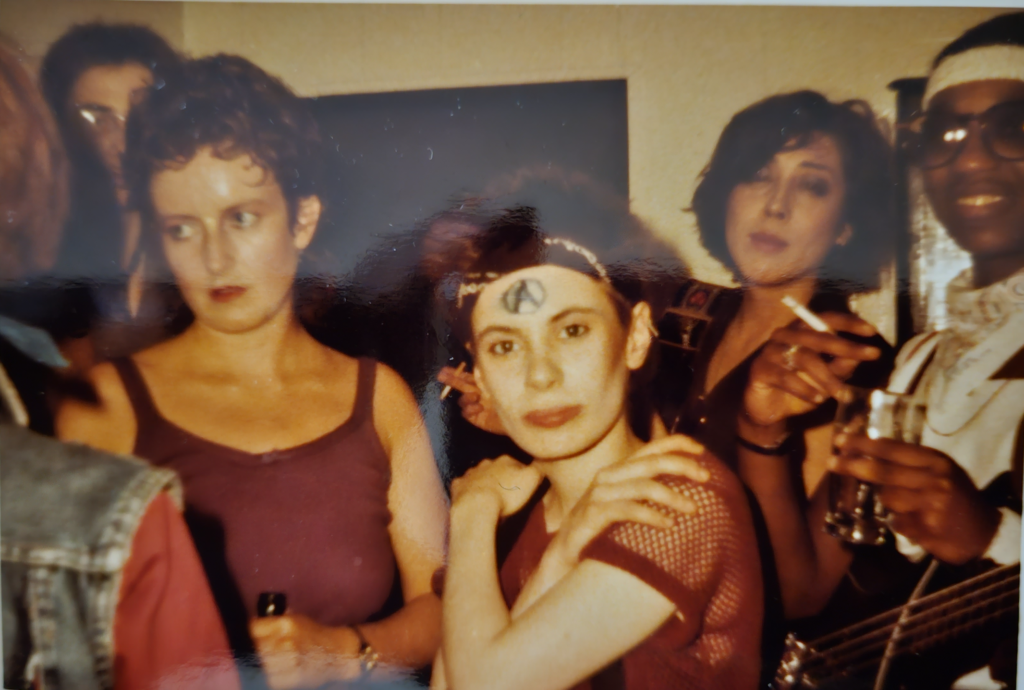
EDL: What happened to the Bloods?
AB: Well, if you were out then, you were basically writing your own death certificate. But we refused to be inauthentic, you know? Then drugs made their way into our scene. There were rivalries about who should be the lead singer …
EDL: Classic band stuff.
AB: Yeah, but really it came from the internalized homophobia. When you’re facing so much oppression from the outside, it ends up [that] you internalize it, and it can become self-destruction.
EDL: You were all together on the cusp of this tremendous right-wing resurgence, just as the Reagan years were beginning. Women organizing underground is the theme of Born in Flames, a film you starred in where Lizzie Borden dramatizes a template for how a women-led revolution might be carried out.
AB: Born in Flames was intended to bring Black women and white women together, to bring lesbians and people of all sexualities together. I think Borden did that really well at a time when it was nearly impossible because, racially, it was very segregated. There were very few Black people involved in the downtown art scene.
EDL: I watched Born in Flames last night for the first time in a couple years. That part in the beginning, where the woman is attacked at the pay phone and the bicyclists save her … I actually kind of, like, teared up a little at this fierce feminist solidarity. What I love so much about Born in Flames is how its depiction of a fictional revolutionary women’s movement makes creating a real one irresistible. It’s almost impossible to watch it and not want to participate. Can we talk a little about your character, the pirate-radio broadcaster?
AB: I wanted to give her an arc where she starts out as a little bit of an asshole. She’s like the lesbian Alex Jones, frothing at the mouth. But then after meeting the Black women and Honey at Phoenix Radio, the character undergoes this kind of evolution of thought, where her activism becomes not just about rage and about having a violent women’s army, but it also has this kind of spiritual component.
EDL: While rewatching the film last night I wondered if, in real life while filming, you had come to a place where you had started to wonder if rage was enough.
AB: Exactly. At the time I was reading Patti Smith’s poetry and Janet Hamill’s—she’s not as well known but was also very influential for me—because they indulged in a certain kind of mysticism. I then became enamored with Isabelle Eberhardt and Sufism. I still absolutely am drawn to this kind of writing. I’m reading now a lot about hermeticism and the Rosicrucians.
EDL: These are all deeeeeeply lesbian themes, Adele.
AB: [Laughs.] Yes, they are!
EDL: I know that Lizzie Borden would describe the scenes to the actors, but then she would leave a lot of room for improvisation in how the actors made the scene together. How much of the creation of this character was up to you?
AB: A lot of it was. Honey wrote all her own lines as well. We were really creating the characters as we went along. Lizzie would set up the dynamic that she would like to see and then often be inspired by something we came up with on our own. For instance, when the pirate-radio station goes mobile, that was something I came up with because I had been in London and I knew about Radio Caroline and how the authorities couldn’t track its signals because the ship was mobile. We would contribute ideas, but it really was her brainchild in terms of the whole arc of the story, which was that, as a slap back to second-wave feminism, Lizzie wanted to bring Black and white women together.
EDL: One thing I’ve always been really curious about is: How did the improvisation on set influence the feminist development of the actors in the film in real life? It is fascinating how Borden wanted to make this strong point about the need for intersectionality in feminism, so she recruited a cast of white and Black strangers and then threw you all together to have these conversations in real time in front of the camera. It was almost like a consciousness-raising group!
AB: Lizzie went into lesbian bars like Bonnie & Clyde’s to look for Black women to participate in the film. Or she’d go up to Harlem to the YWCA to find queer women. What happened during the filming was I actually became very close with Honey, who was a brilliant singer and who could see inside me that I was a white woman who was the anomaly in terms of how I’d grown up with race. I grew up in reformatories in Ohio, so I had grown up with Black girls. Honey and I bonded. We became very close.
EDL: Toward the end of the book, you’re at a very low moment in life with the dissolution of the Bloods, and you are bottoming out on substances. You turn to Honey for help, and she takes you in.
AB: She was an incredible person, and she died young. I write about it in the book, and it’s one of those tender moments for me where I lost somebody that I cared about deeply. If you have a hard copy of the book, you’ll see that there’s a spiral depicted in the front of all of the people that I lost or that we lost collectively way too young that were involved in that scene.
EDL: After the Bloods period, when this sort of momentary utopian dream of an all-lesbian band has come to an end for you, you reenter the cutthroat music business as a solo artist—where you find yourself suddenly in this competition with Madonna, who has released her debut single at the same time as yours. I’m wondering if you could imagine an alternate universe where things went differently with you and Madonna, and you weren’t competitors?
AB: Ah! Well, again, when Madonna and I first started out, you couldn’t be out of the closet, you know? And here I was, walking around dressed like a little pimp! The music people were not having it.
EDL: If you couldn’t project sexual availability to male audiences, then you could not have a career.
AB: Exactly. And she did it expertly, you know? She was a great performer. No duende there, but a great performer.
EDL: I wonder if you could define duende.
AB: It’s my barometer for whether art moves you. It has to do with the vulnerability present in the work. [The term comes] from [Federico García] Lorca’s writings about how a true artist must be able to open up their wounds and be vulnerable. You can hear that in the voice. Amy Winehouse, Maria Callas. They were not afraid to look ugly when they sang. You have to let your pain come out in a way where pain can be beautiful. Madonna: great performer, but no duende.
EDL: Are you retired as a music performer?
AB: I do miss singing. I’m actually thinking about doing another band. I’m talking to some people right now. I think it’s time because I’m so agitated by what’s going on politically. [Laughs.] I’m still waiting for the bicycle brigades!









Contribute your thoughts by leaving a reply