






“Bro, how cold are you that you joined ICE …” read a sign a protester held at a demonstration at Los Angeles City Hall on January 30. “Just walk away.” The strategy of the sign, directly addressed to US Immigration and Customs Enforcement agents (though there were none in sight in the moment), invoked a particular vein of antifascist speech: the demoralization campaign, directly—even intimately—delivered to an adversary. In one of history’s most potent examples of such an effort, in 1944, the artists and public intellectuals Marcel Moore and Claude Cahun elided demonstrations and put their communiqués directly in the hands of Nazis, provoking internal debate.
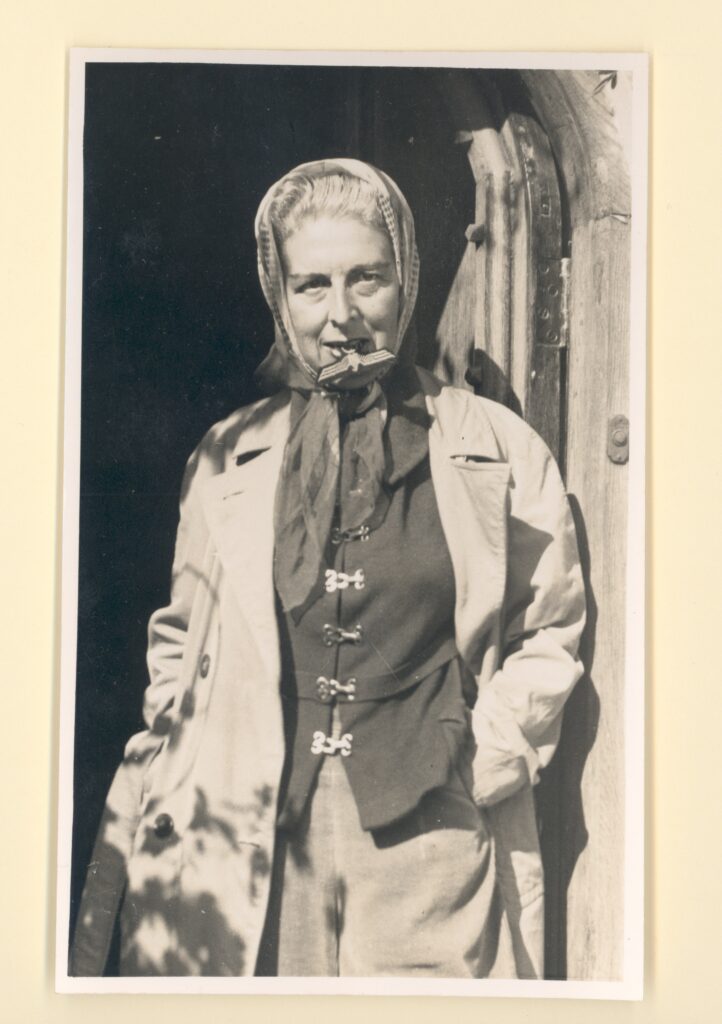
An exhibit at the Contemporary Art Museum St. Louis, And I Saw New Heavens and a New Earth: The Partnership, Art, and Activism of Claude Cahun and Marcel Moore, reveals the various forms of address used by Moore and Cahun: some exclusively to each other during their lifetimes; some to theatrical, artistic, and literary audiences; and some to individual Nazi soldiers whose ranks occupied the island of Jersey, on which Cahun and Moore lived. These latter interventions led to both women’s imprisonment from 1944 until the end of the war.
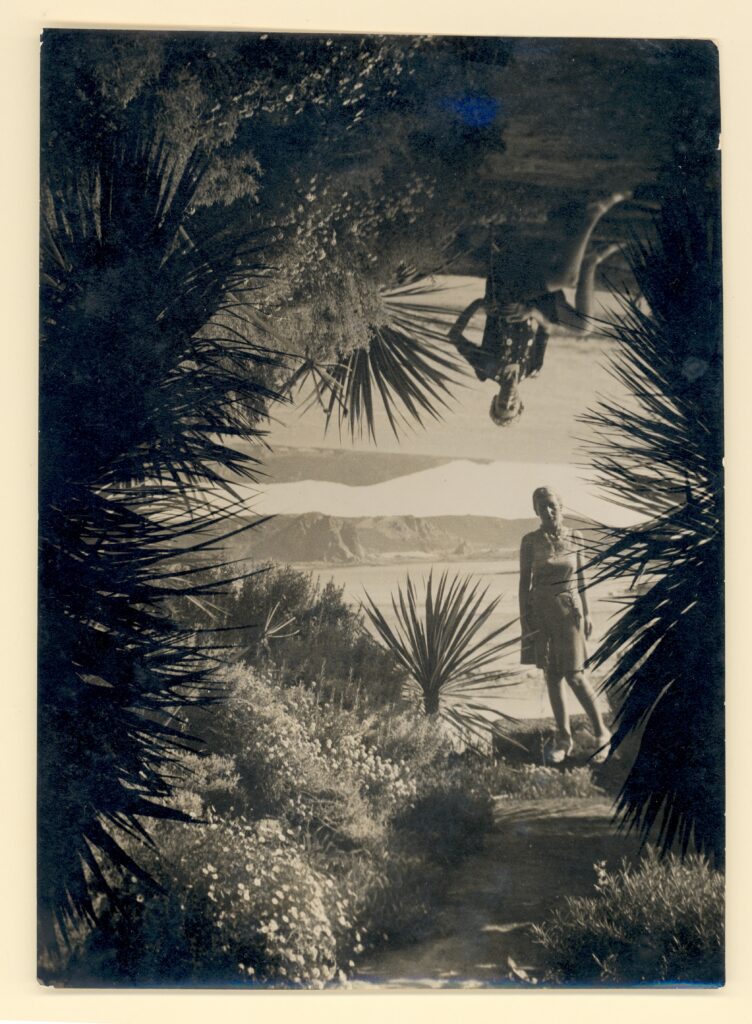
Organized by chief curator Dean Daderko and writer and oral historian Svetlana Kitto, the exhibition begins on a long, light gray wall featuring fifty-nine personal photographs that congregate in a loose horizontal line. Between the fortieth and the forty-first of them, the images pause. That recess—a palpable couple of feet—represents the period of Nazi occupation of Jersey, 1940 to 1945. The image Marcel Moore in a canoe, from 1940—the last print before the break—is a very different figure from the woman who emerges in the first photograph after it, a studio portrait from 1945. The woman who stabilized her oar on her shins in a calm sea now looks at the camera with no pretense to pleasure. Cahun and Moore made the pictures on this wall for each other, and although they kept their Kodak camera despite orders to surrender all such devices, the few photographs that remain from this period are not central to their vernacular memory of that time. Instead, during those years, they made work targeting the Vichy military.
Before the war, the women made work addressed to intellectual communities in France. One vitrine features Cahun’s published tract, Les Paris sont ouverts, or The Bets Are Off (1934), in which she discourages criticism that privileges, per a translation, “manifest ideological content” in poems, specifically those by Louis Aragon. She says that such criticism favors “cheats” who “engage in a kind of ideological overbidding.” Cahun addresses her peers, socialist realists in the Association des écrivains et artistes révolutionnaires, when she says that direct action is “revolutionary masturbation” that disarms, as with a man in a “public hall” who “spends himself in desires”; “when the time comes, he cannot make love.” She inclines instead toward a latent revolutionary content that provokes both author and audience through a “relaxation of surveillance” of the consciousness. Soviet socialist realism had been enshrined in Moscow’s law that year, and the association presented this as an opportunity for France. In a moment when debates over writers’ propagandistic posture proliferated internationally, Cahun resolved that art might more effectively change minds when it did not purport to ideological consistency.
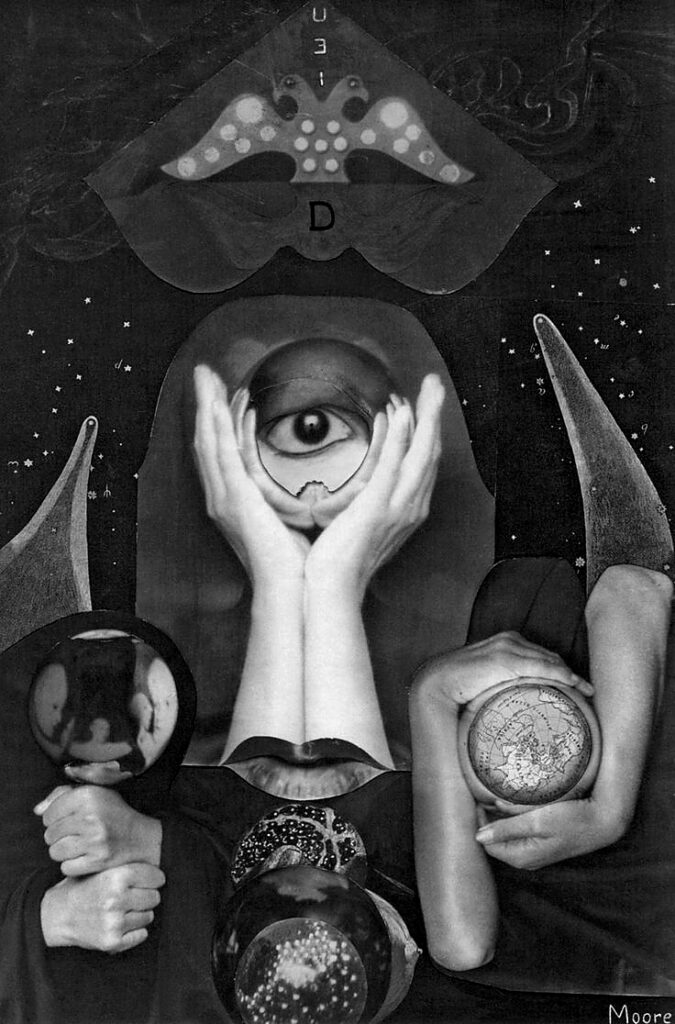
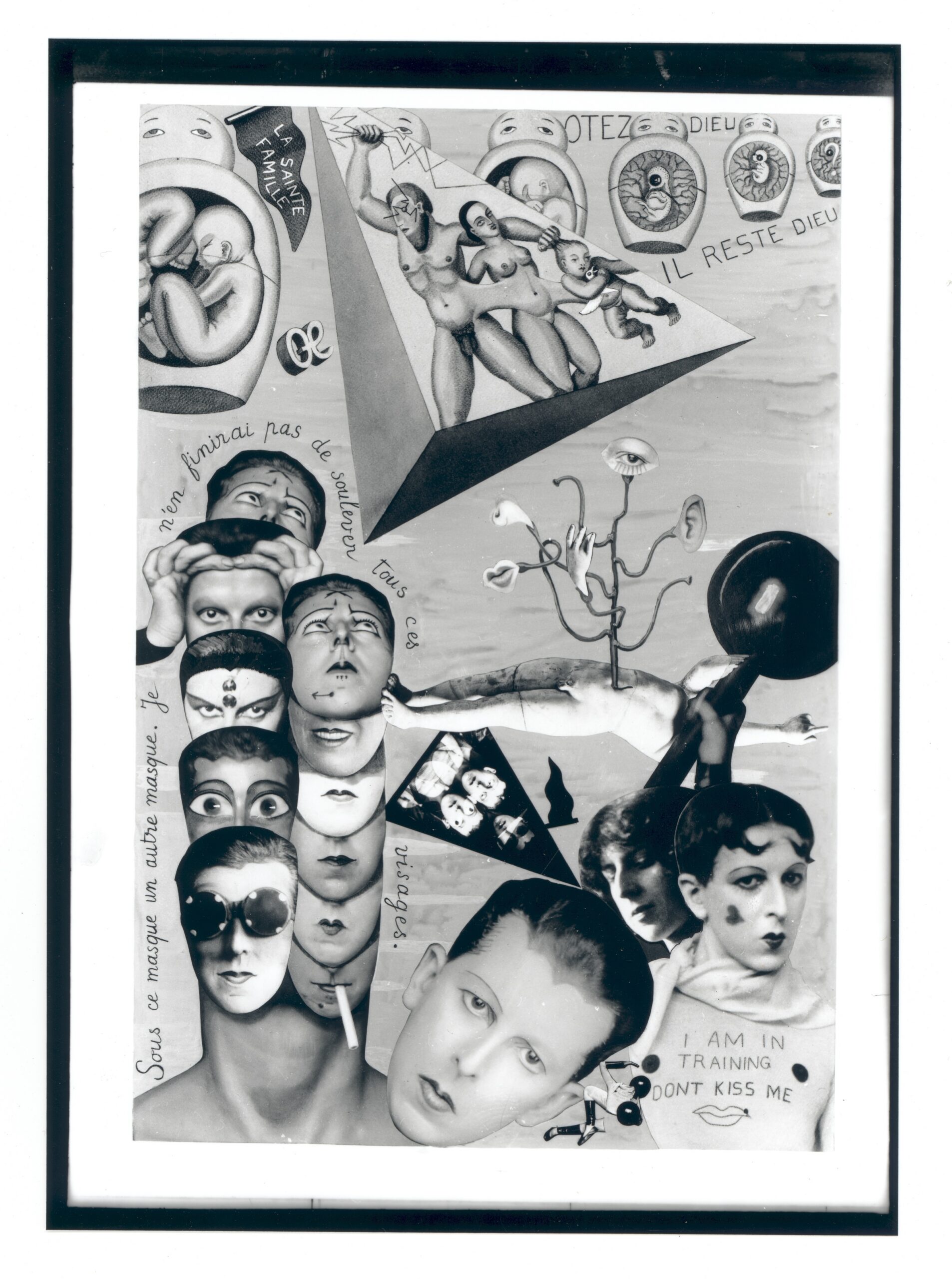
Photographs and photocollages the women made together surfaced during their lifetimes as illustrations for the book Aveux non avenus (Inadmissible Confessions,or Disavowals). A few of the images were mounted and shown in the window of the publisher, Paris: Éditions du Carrefour, when the book launched in 1930. The collage defies conventional Western notions regarding the orientation of graphic figures, combining cutouts of Cahun’s head in various stages of costume with drawings of fetuses inside matryoshka dolls, with eyes and lips growing like the fists of Joshua trees—all figures divorced from ground, unless that ground is the page. Here are images that include cats, cartoons, vernacular portraits, and those staged by the artists themselves. At CAM as well, the book is shown separately from the collage. Wall text includes neither Cahun’s nor Moore’s name as a nod to the work’s shared authorship.
Cahun’s and Moore’s projects are full of productive ambivalence; sections of their first collaborative publication, Vues et visions (1919), are called “Partial Impartiality” and “Impartial Partiality.” Twenty-five pairs of prose poems link ancient Greece and the modern Breton coastal town Le Croisic. Moore’s black Deco graphics cuddle Cahun’s text throughout: L-shaped boxes holding space for the ideas they indicate visually, and yet also partially obscuring their own contents. It is as if the text finishes the sentence of the image, cut off by its own oddly shaped frame, and vice versa. Moore worked as an illustrator and set and costume designer at, among other places, the Theatre Esoterique and studied two-dimensional arts at the École des Beaux-Arts in Nantes. Elsewhere in CAM’s show, there is an hors texte she drew for a book of poetry by Marc-Adolphe Guégan, Oya-insula; ou, L’enfant à la conque, open to a page on which a person who is identifiable as neither female nor male sits cross-legged atop a village on a medievalist map, transcribing sounds from a conch shell. These books were written and illustrated for the community of thought leaders to which the women belonged.
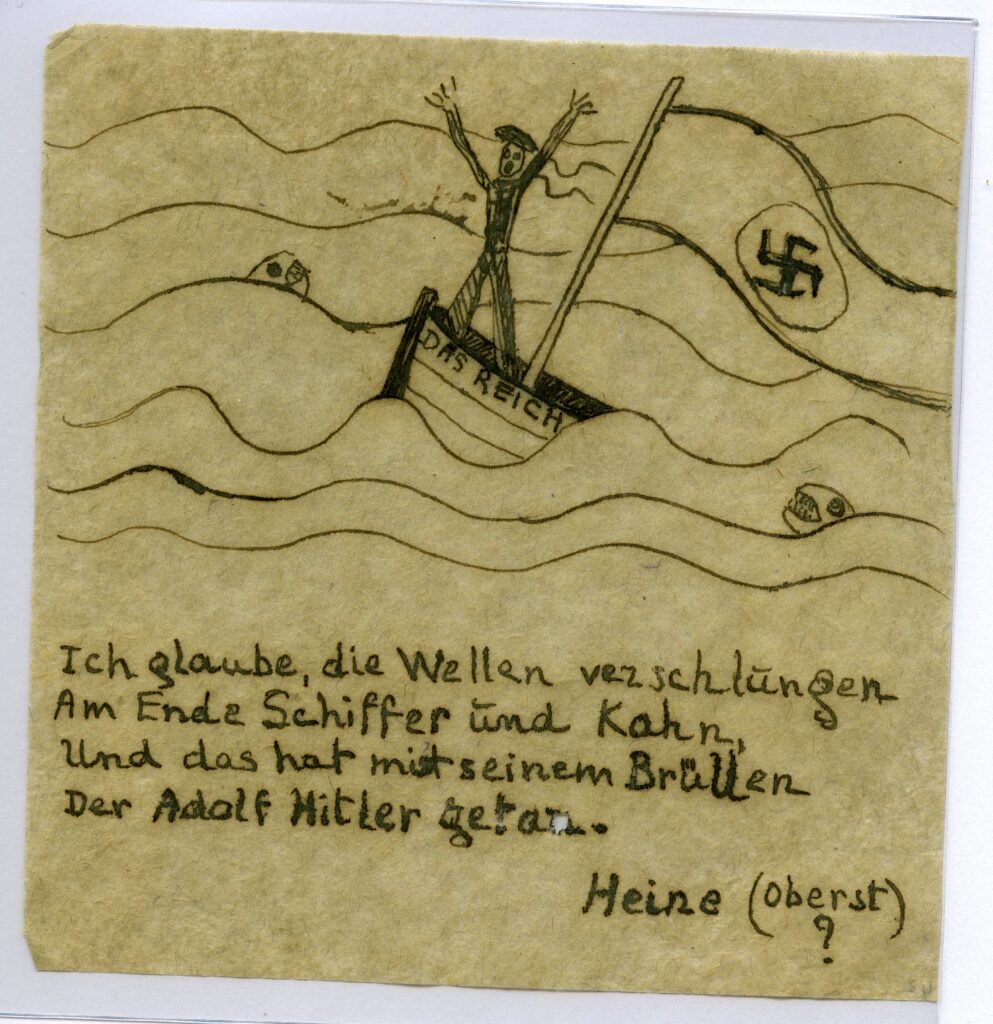
When Cahun and Moore later decided to infiltrate the minds of their island’s Nazi occupiers, they did so not through manifest ideological content, but through that relaxation of surveillance about which Cahun had written earlier. On BBC radio, they heard broadcaster Colonel Britton (a.k.a. Douglas Ritchie) encouraging the sabotage of Nazi forces, fostering a sense of solidarity among people who opposed the Vichy occupation of France and other territories. They were aware of leaflets as a form of personal address in propaganda: All the powerful nations were doing it. The Germans shot them out of 100-mm propaganda projectiles. The Russians dropped Aleksandr Zhitomirsky’s photomontage out of planes. Cahun and Moore ingested propaganda’s construct and put out actual influence, like the found-object sculptures Cahun at times made, but a version that refuses its pedestal in favor of direct engagement with its intended audience.
They made notes—little interrogative texts and drawings that they referred to as “paper bullets.” They made them on cigarette papers, for which an addict might reach out in the hopes of rolling smokes, and placed them on windshields or in pockets, where they might be easily, even accidentally, found. The notes are signed, “The soldier with no name,” creating an instant insider relationship between writer and reader. They are largely written in German. In the five notes on exhibit at CAM, their collaborative roleplay is total. Their performance was so successful in its imitation of its audience and in its elision of another public that it penetrated the average soldier’s interior monologue. Given Moore’s talent in draftsmanship and Cahun’s in words, they could have taken on a far more articulate posture. Instead, they met their chosen audience where they were: What vernacular did they speak? To whom would they listen? What kind of illustrations would be taken as credible, given the signature? What would instill in this audience a sense of reasonable doubt in its military enterprise?
The notes pose questions meant to give the intended reader excuses to defect. One of them refers to Hitler as a “non-German vampire,” using his status as a naturalized German to discredit him. Another plays on the reader’s fears about a rising tide of enemies in September 1943. They invoke the ghost of the Great War, a “specter” warning that the current Nazi administration wants to deceive the military “as they deceived us in 1914–18.” A note that distinguishes between the Germany of Goethe, with which the reader might still proudly identify, and the National Socialist Greater Germany of Hitler, which “[Hitler] is trying in vain to defile,” gives the reader a way to distance themself from the dictator without distancing from their country. In perhaps the most intricate note displayed in St. Louis, Moore—fluent in German—wove together that language with Czech and Russia’s Cyrillic alphabet (albeit imperfectly) to declare that “the unfounded revolution should be undertaken by all, not by one.” The logic of this missive is in its invitation: a multinational call to include the reader in the enterprise of “common ground.” The writer bids to “reduce the differences that exist between people,” making the reader feel that, in doing so too, they will not be alone.
As Jeffrey H. Jackson wrote in Paper Bullets: Two Artists Who Risked Their Lives to Defy the Nazis, Cahun and Moore “hoped to divide the soldiers from their leaders,” but they did more than that. Cahun and Moore divided the soldier from themself. They conceived and executed a form of address that truly accessed the personal doubts of one actor at a time. The pointed, one-on-one scheme threatened the authoritarian regime more than could any declarative statement of manifest revolutionary content or even any embarrassing joke. What kind of address can now be as personal as that to which Cahun and Moore gesture—one capable of changing the minds of those occupying not another country, but the streets of their own?







Contribute your thoughts by leaving a reply