


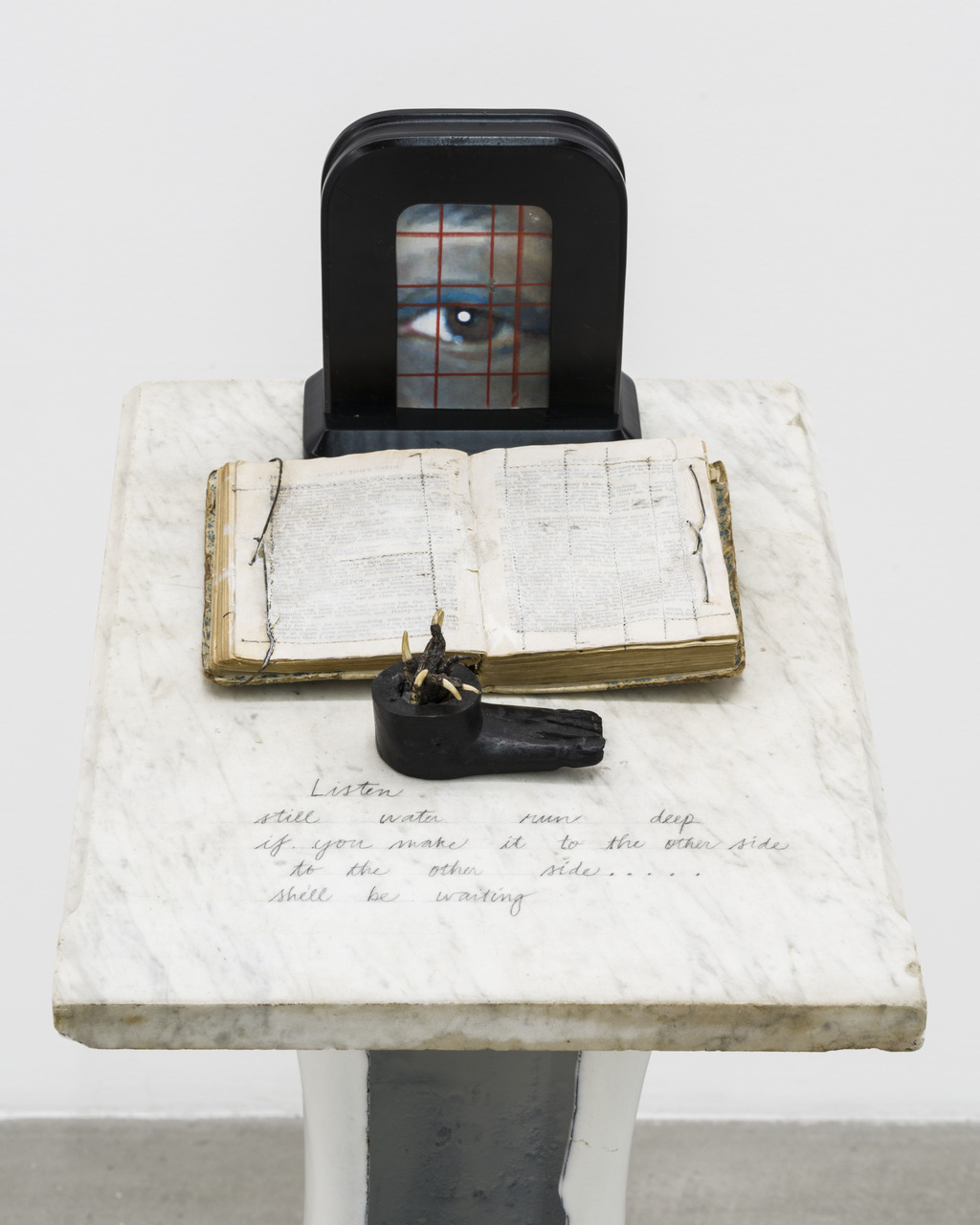






Throughout Mildred Howard’s first retrospective, Poetics of Memory at the Oakland Museum of California, the confluence of historical and personal memory generated such a singular encounter that the energy shot through me like a lightning bolt. The exhibition, a portrait of the country that centers Black American history, presented five decades of the artist’s work, from sculptural assemblage to large-scale installations. Howard’s use of familiar objects resonates with a viewer’s everyday experience, while her references to national figures who have shaped public narratives for centuries conjure harsher realities of discriminatory violence and national hypocrisy, so often elided in official narratives.
The first room featured two giant bronze barrel keys, standing perpendicular, each a little over four feet high. The keys fit into brass keyholes set into low-lying indigo plinths. All of this had an Alice’s Adventures in Wonderland effect: The floor became a door, and the viewer’s body seemed to shrink. The disorientation continued as habit (we’re not used to unlocking the floor), and gravity made the promise of these keys and doors more elusive.
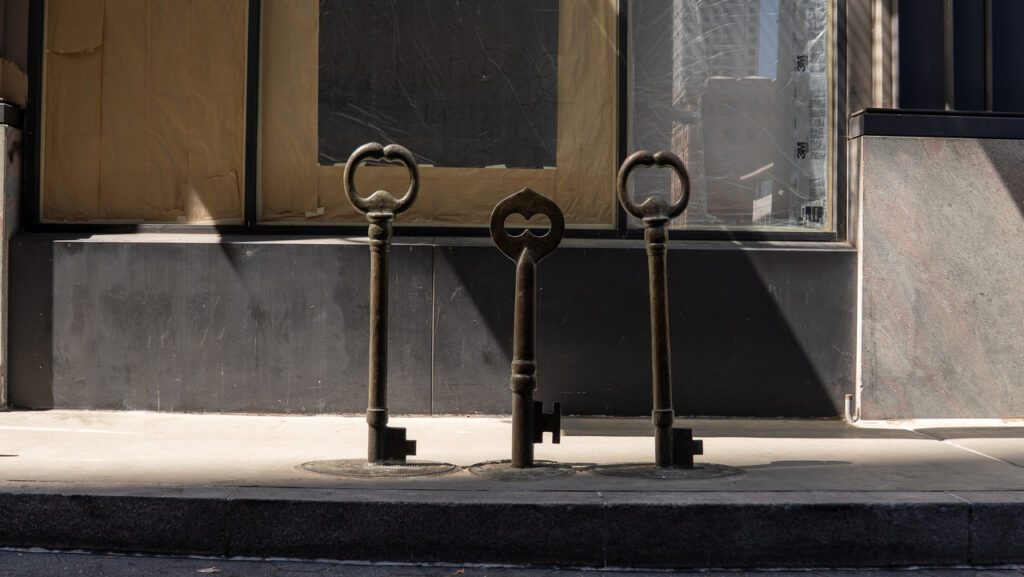
The keys in the show were prototypes for a public sculpture, Locks and Keys for Harry Bridges (2001), installed in downtown San Francisco to honor the founding president of the International Longshore and Warehouse Union, an organization central to Howard’s family history. Bridges is one of sixteen public sculptures and semi-permanent installations the artist has created across the Bay Area, where her family has deep roots. After relocating to San Francisco from Texas as part of the Second Great Migration, her family settled in South Berkeley, where Howard’s father, Rolly, worked as a longshoreman. Her mother, Mable, worked as a shipyard painter and helped secure women’s eligibility to join the union, later running an antique shop out of the family home. While Bridges recalls Howard’s family history of dockyard careers, another of her public sculptures, Delivered, Mable’s Promissory Note (2024), honors her mother’s successful campaign against aboveground train tracks that would have severed the connection between South Berkeley’s predominantly Black business district and the rest of the city.
Just as the keys brought personal and public histories into conversation, two subsequent galleries drew on literature, history, and pop culture to plumb American traumas and disparities. In an early Xerox collage, Untitled (1979), the artist has embellished her own likeness with ritualistic-looking gold and black paint and hung a beaded bracelet to the left of her face. Post Traumatic Slave Syndrome: This Ain’t My Real Life (2001) is a heart-shaped box laid open to reveal a collection of silk paper pillows resembling chocolates, each of which features the Xerox transfer portrait of either Tupac Shakur (1971–96) or Biggie Smalls (1972–97), both killed in drive-by shootings. Howard’s title comes from a book by Joy DeGruy on how the trauma of slavery is passed down and normalized through generations. Meanwhile, chocolate—the product of a historically colonial industry that relies heavily on the labor of children on the Ivory Coast to this day—underscores the extent to which the musicians’ commodified personas relate to much larger systems of exploitation.
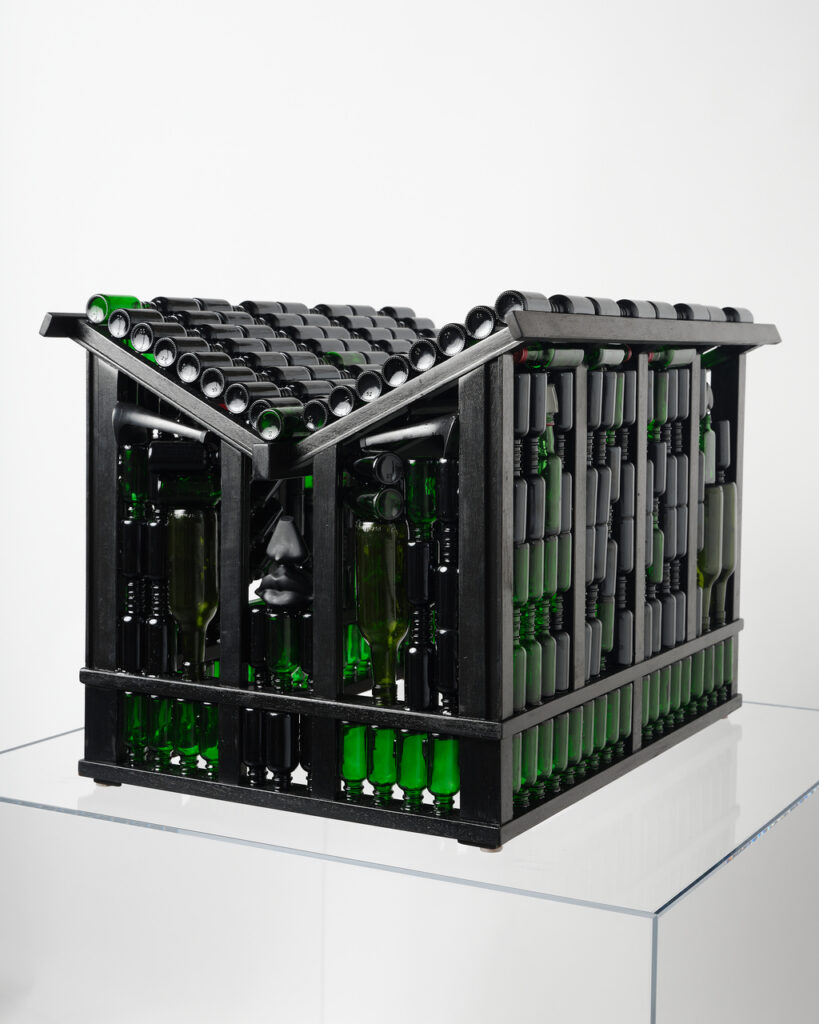
In the sculpture Black Has Always Been a Color (2024), Howard invokes a public discussion that began with Ishmael Reed’s 1967 Arts article that celebrated the Black Arts Movement as remedy for white society, conflating racial identity and artistic output. Howard’s fellow Oakland artist Raymond Saunders (1934–2025) published a counterargument the same year, “Black Is a Color,” that suggests the artist rather “deals with the human condition,” urging artists to go beyond essentializing identity. Howard’s sculpture references the aforementioned dialectic through a model-size house clad with black and green bottles, a select few of which are painted bright red. The color scheme matches the Pan-African flag, created by Marcus Garvey in response to a racist minstrel song from the 1900s. The flag became, in 1920, the official banner of the Black nationalist organization Garvey founded and a symbol of collective identity and freedom from the systemic racism faced by African Americans. Into this tiny shotgun house, which also has a nose and mouth, Howard condenses a century’s worth of arguments about Black identity and expression.
The final, theatrically low-lit gallery—layered enough to be an exhibition in itself—immediately revealed itself as an expansive meditation on pervasive American violence and its effects. The large-scale installations that occupy the space are dominated by the national colors of red, white, and blue, making obvious Howard’s interrogation of patriotism, 250 years after the nation falsely promised life, liberty, and the pursuit of happiness as unalienable rights. Four monument-sized figures wrapped and illuminated in hot pink shrouds are positioned like security guards around the room. They belong to Howard’s Untold Histories / Hidden Truths series (2025–26), and they depict Peter Burnett, William Gwin, Francis Scott Key, and Junípero Serra, all men celebrated in history, despite being slaveholders, white supremacists, or beneficiaries of the forced labor of Indigenous peoples. Whereas statues are often beheaded during revolutions or physically removed, as during America’s so-called “anti-monument fever,” Untold Histories / Hidden Truths holds these figures enduringly accountable as contested agents of trauma. Howard keeps alive the memory of these men—while covering up their human features so that they rather resemble monsters.
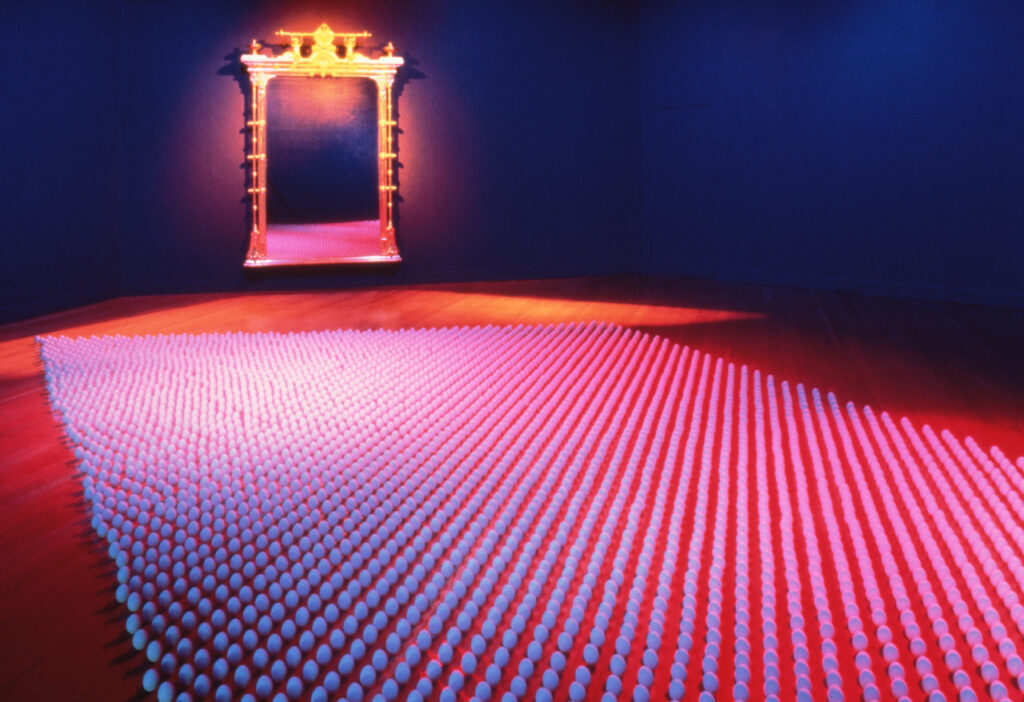
Another large installation in the room, Crossings (1997/2026), consisted of an indigo blue platform holding hundreds of antique rose-colored eggs. Behind that low-lying stage, a large antique mirror with an ornate gold frame leans against the wall, situating the viewer’s reflection in the installation. The piece memorializes the Middle Passage’s forcible transportation of more than ten million enslaved Africans across the Atlantic Ocean between the sixteenth and nineteenth centuries. Indigo came to the American colonies from African tradition, where it was associated with royalty. The process of rendering the pigment is toxic, and its production in colonial America fell to enslaved people.
Blackbird in a Red Sky (a.k.a. Fall of the Blood House) (2002)—a life-size shotgun-style dwelling made of red blown glass—stood in the far corner of the grand gallery, inviting visitors to walk through its central cavity. Seen through the dwelling’s glass, the gallery takes on a different cast, evoking the discriminatory practice of redlining and its enduring effects on Black communities. As with Black Has Always Been a Color, the sculpture conjures shotgun-style homes, and the repeated architectural form is further significant. Called togunin the West African Yoruba language, this kind of house typically has two doors, front and back, joined by a single corridor through the center of the home. They first appeared in the United States in New Orleans in the nineteenth century and were later popularized throughout the South after the Civil War for working-class and sharecropping families. Howard’s use of bottles further references a West African tradition in which they were hung from trees or buried in the ground to ward off evil. The safety, hospitality, and interiority that a home should promise are not taken for granted in Howard’s work, and Blackbird in a Red Sky (a.k.a. Fall of the Blood House) draws us through its central path and out its opposite door, where we encounter a large pond with red glass apples floating in it. Because of the room’s lighting, the water is black; its apples glimmer with ominous appeal.
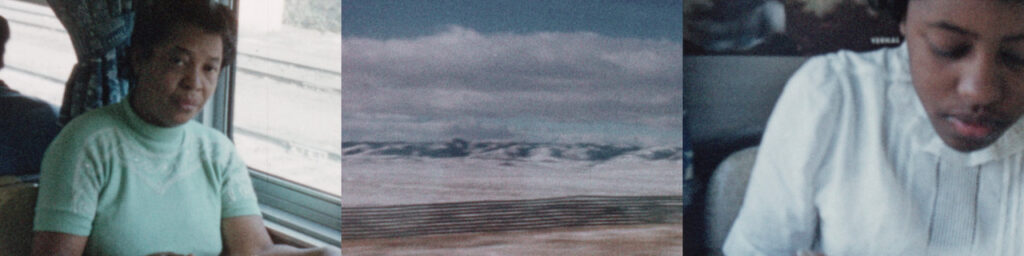
Personal memory rushed back to the fore in a recent work, Moving Stills (2026), a three-channel installation of 8mm still footage. Howard took the images as a teenager in 1959, during a train trip from Oakland to visit family in Galveston, Texas, one of the major slave ports of the nineteenth century. She would have visited just a few generations after Juneteenth’s emancipation of enslaved people, at a time when Jim Crow laws were still in full effect. Only recently rediscovered by the artist, the footage is projected onto a white veiled curtain that dominates the final gallery. Figures and landscapes fall softly upon the curtain, distorted slightly by its weave for a ghostly effect that recalls how history is embedded in a network of objects, kinship, and occasions: The footage not only retraces the path of the Second Great Migration in reverse, but follows Howard’s eye as a burgeoning artist, embedded within a family unit. The personal, familial, and political selves are thus united in this work. In making private memory public, Howard brings the tragedy of American history into intimate focus. Sharing the gallery with the shrouded ghouls of America’s canon and the spectral evocations of slavery and sharecropping, Moving Stills challenges viewers to confront our historic, personal, and ideological hypocrisies while calling for a better, just, liberated future.









Contribute your thoughts by leaving a reply