








Aurèlia Muñoz’s Ondulaciones (Undulations) (1974) is one of the Catalan artist’s most monumental creations. The piece is composed of thick nylon hawsers—a hardy, braided rope typically used for mooring boats—intricately arranged in long, knotted rows. Despite the sculpture’s considerable size (660 pounds, 8 feet wide and nearly as tall), its warm off-white color, ribbon-like body, and rising peaks give it the appearance of something much lighter, of something almost weightless.
Titles matter immensely in Muñoz’s work, often illuminating the ideas and impulses at play within them. Ondulaciones comes from the Latin word unda, or wave (onda in Spanish), and the sculpture’s supple shape infuses it with a sense of internal motion, as if it’s merely gathering itself before taking flight. Large, animistic macramé forms like Ondulaciones earned the artist international acclaim, and they remain the body of work that Muñoz is best known for today. But when she made it, this sculpture marked a new wave in the artist’s practice—and a drastic change in Spanish life—that would soon take her far away from the heft and monumentality of works like this one, toward a lighter, more intimate, and an increasingly far-reaching, even cosmic, vision.
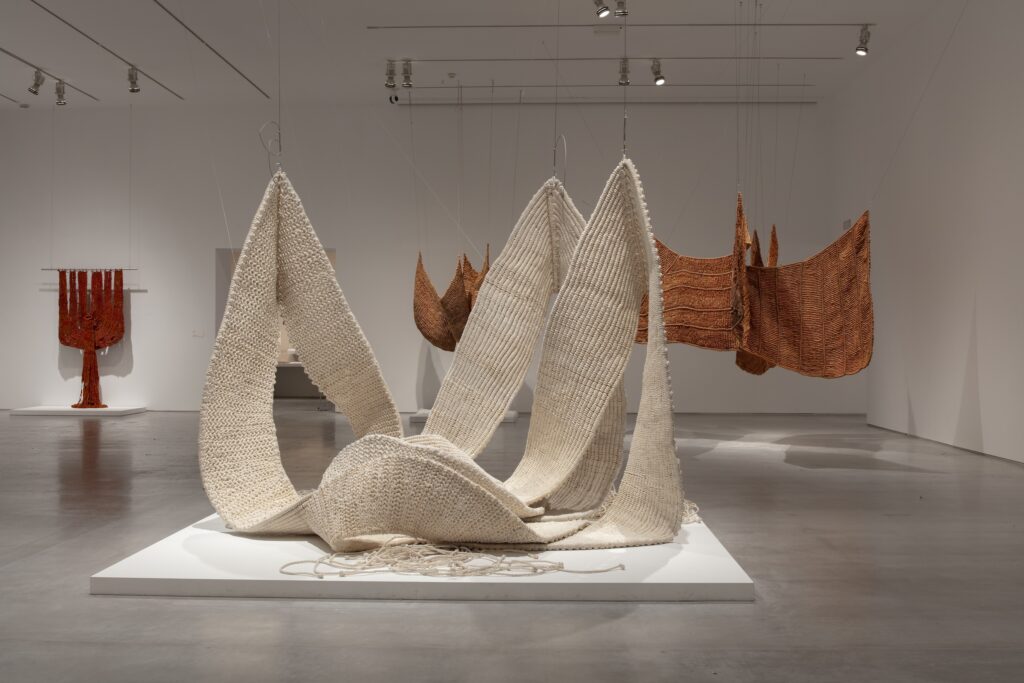
Ondulaciones stands at the geographic center of Aurèlia Muñoz. Beings at the Museo Nacional Centro de Arte Reina Sofía in Madrid. The retrospective features more than 150 artworks from all five decades of Muñoz’s remarkably varied career, during which she worked in embroidery, tapestry, assemblage, collage, drawing, sculpture, installation, and handmade paper. Housed on the ground floor of the museum’s Nouvel Building, the exhibition’s dimly-lit, low-ceilinged anteroom gracefully invites visitors to enter a separate and more reflective space, and the room’s coarsely woven jute floor shifts our attention to texture, touch, and motion before we even encounter the artist’s work.
Born in the Catalan capital in 1926, Muñoz was just ten years old when the Spanish Civil War broke out. It was a desperate time that Sílvia Ventosa, the artist’s daughter, co-curator of the exhibition, and director of the Aurèlia Muñoz Archive, says contributed to Muñoz’s later health struggles (another barrier she would confront in her art practice). In 1959, the thirty-three-year-old married mother of two enrolled in Barcelona’s Escola Massana to study ceramics. A year later she moved her focus to textiles, drawn to their malleability and flexibility. She presented her first solo exhibition in Barcelona in 1963, and showed in her first Lausanne International Tapestry Biennial two years later.
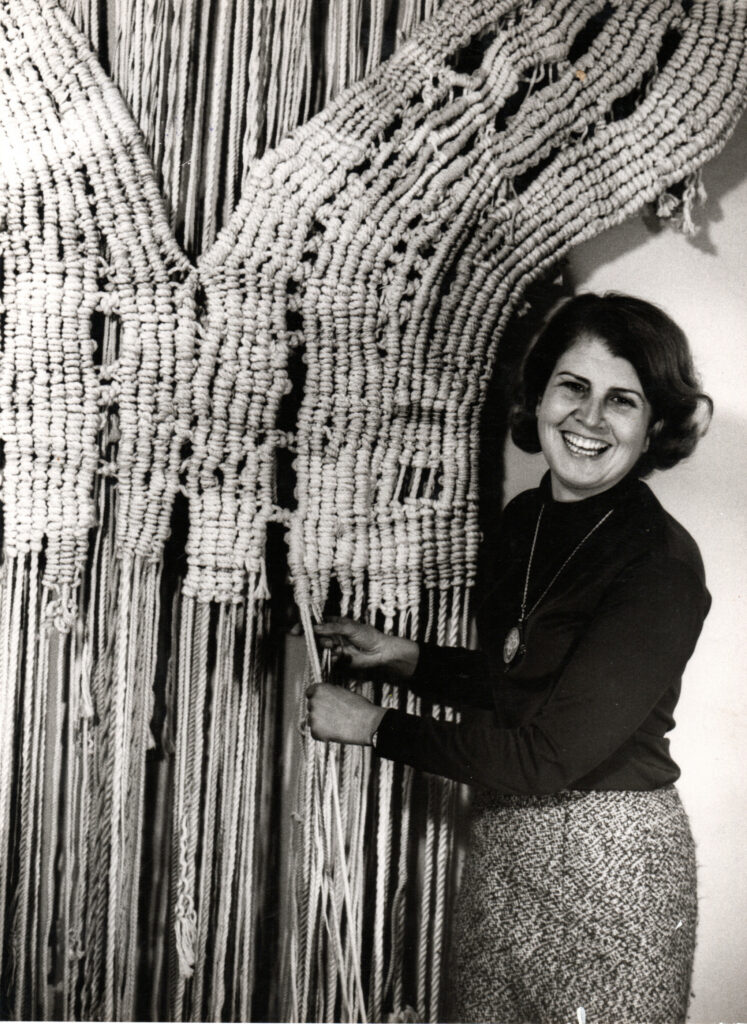
Muñoz’s six appearances at this Biennial between 1965 and 1983 allowed her to meet and share her work with some of the leading lights of the Fiber Art and Nouvelle Tapisserie movements. Her contact with critics, curators, and collectors there led to her participation in numerous touring exhibitions across Europe and the United States, granting her critical access to contexts that were more receptive to women artists and their work than the male-dominated mainstream Spanish art scene, which like so many of the country’s institutions at the time, functioned under the influence of the right-wing, militantly patriarchal government.
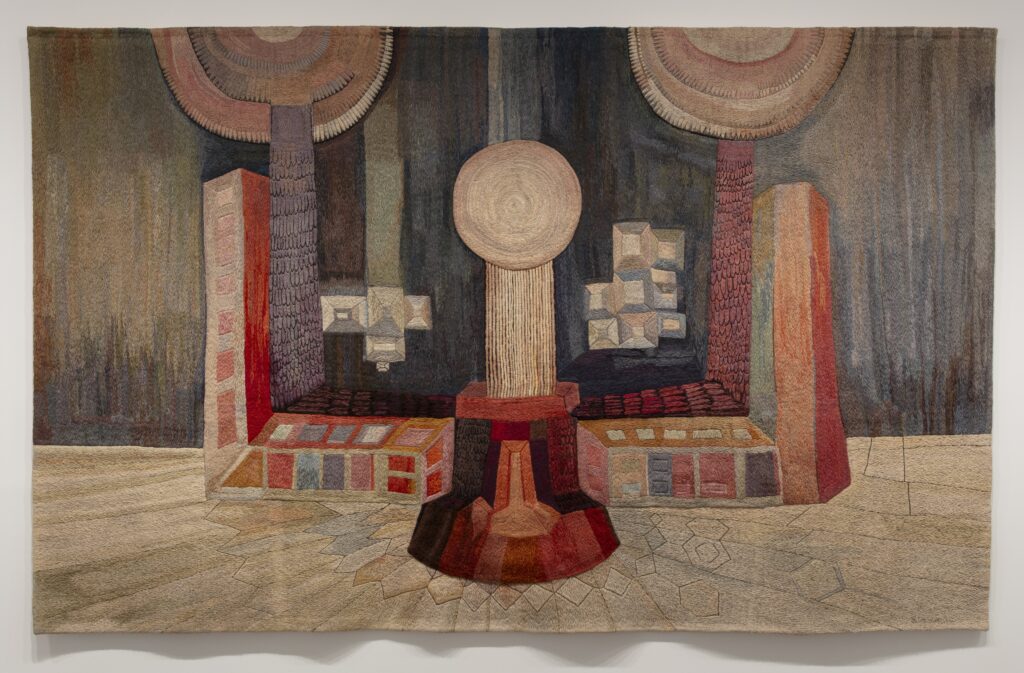
The artist’s ambitious early tapestry pieces fill the first gallery of her retrospective. Executed in the labor-intensive acu pictae (Latin for “painting with a needle”) embroidery method, these expansive, earth-toned works draw from the esoteric Catholic iconography and Medieval Catalan textiles that Muñoz observed at nearby churches and cathedrals, as well as the unconventional architecture of Antoni Gaudí and the Surrealism of Paul Klee. The largest textile on display, Homenaje a Jerónimo Bosco (Homage to Hieronymous Bosch) (1971), spans a staggering ten by fifteen and a half feet. Though it follows the technical parameters of tapestry—a craft historically linked to the decoration of European aristocratic and religious spaces—the piece’s enigmatic abstract imagery and densely-sewn, upraised passages suggest a desire to leave the wall, and tradition, behind.
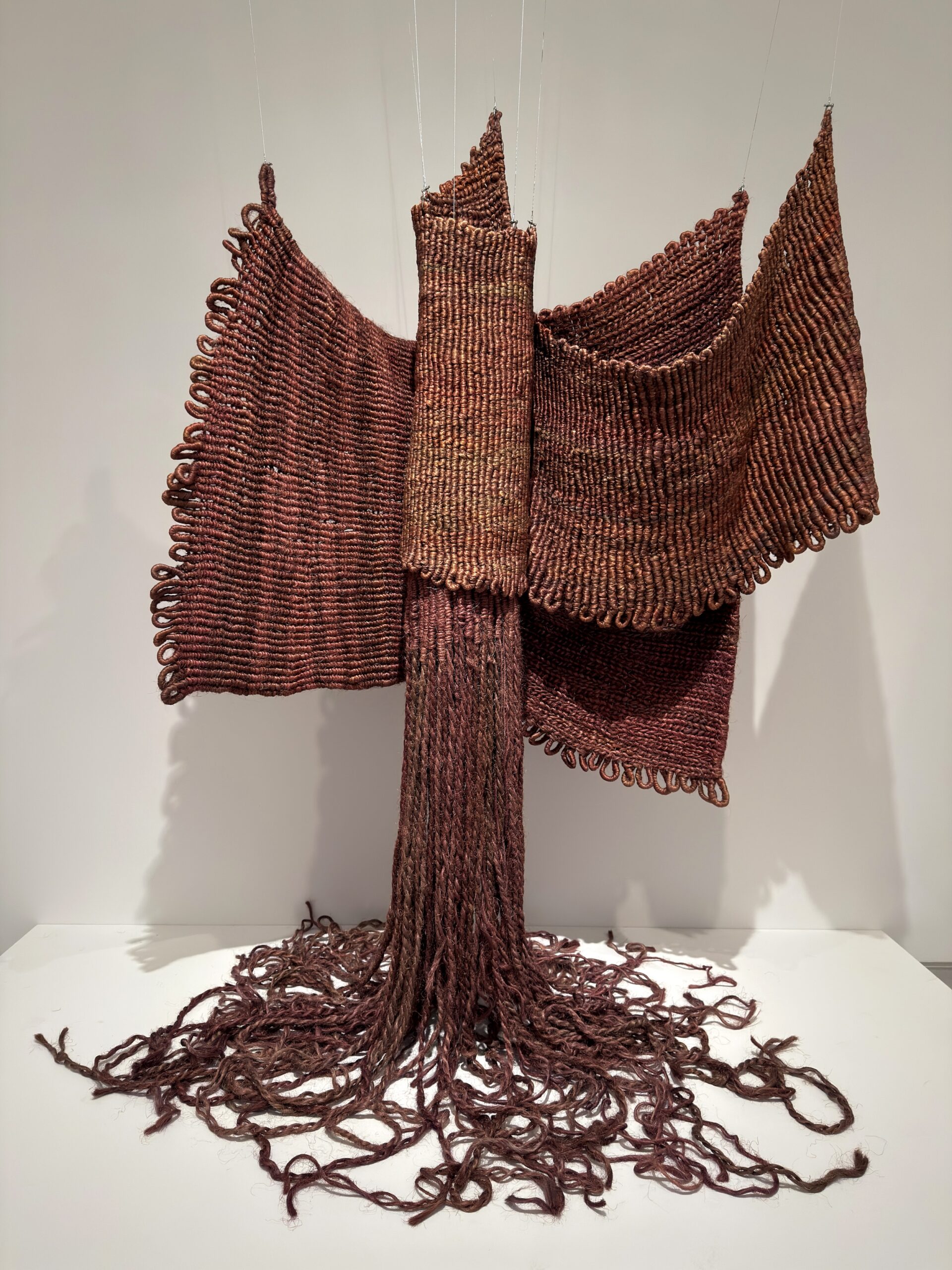
In the next room, Ondulaciones is surrounded by a number of massive macramé companions made of knotted sisal and jute. These freestanding woven towers, curtain-like cascades, and complex, layered orbs boast a marvelous stature and singularity. Almost all of Muñoz’s works from this era surpass the scale of the human body—the largest stretches fifteen feet upward—a clear signal of the artist’s daring and determination. Many of these sculptures were created during the dictatorship of Francisco Franco, a National-Catholic regime that placed immense restrictions on Spanish women’s daily lives and wider social possibilities. For nearly 40 years, españolas were largely banned from advanced professional and academic pursuits; their options were further limited by the fact that divorce, abortion, and contraception were illegal. “Women were invisible,” Ventosa told me on a recent video call. “They had to stay at home at the service of their husbands and families, and it was not well-regarded for them to work for themselves.” Yet at a moment when women needed written permission from their fathers or husbands to open bank accounts, get passports, or travel, Muñoz conjured and constructed these enormous, experimental artworks in her Barcelona studio, and forged her exceptional international career.
Franco died the year after Muñoz created Ondulaciones, finally opening the country’s path to democracy. Prior to 1975, she kept her tapestries and macramé sculptures connected to the wall or floor through anchors, stone weights, or draping ropes; by the late 1970s, she’d begun making floating pieces like Àguila Beix (Brown Eagle) (1977) that left the earth entirely. Muñoz’s next series, Ocell estel (Bird Kite) (early 1980s), are a buoyant combination recalling nautical sails, Leonardo da Vinci’s flying machines, and airborne creatures. These works spread their wings across architectural and outdoor spaces, stirring in the wind and soaring above the heads of those who encountered them. This palpable shift toward lightness—both material and conceptual—would shape the rest of her career.
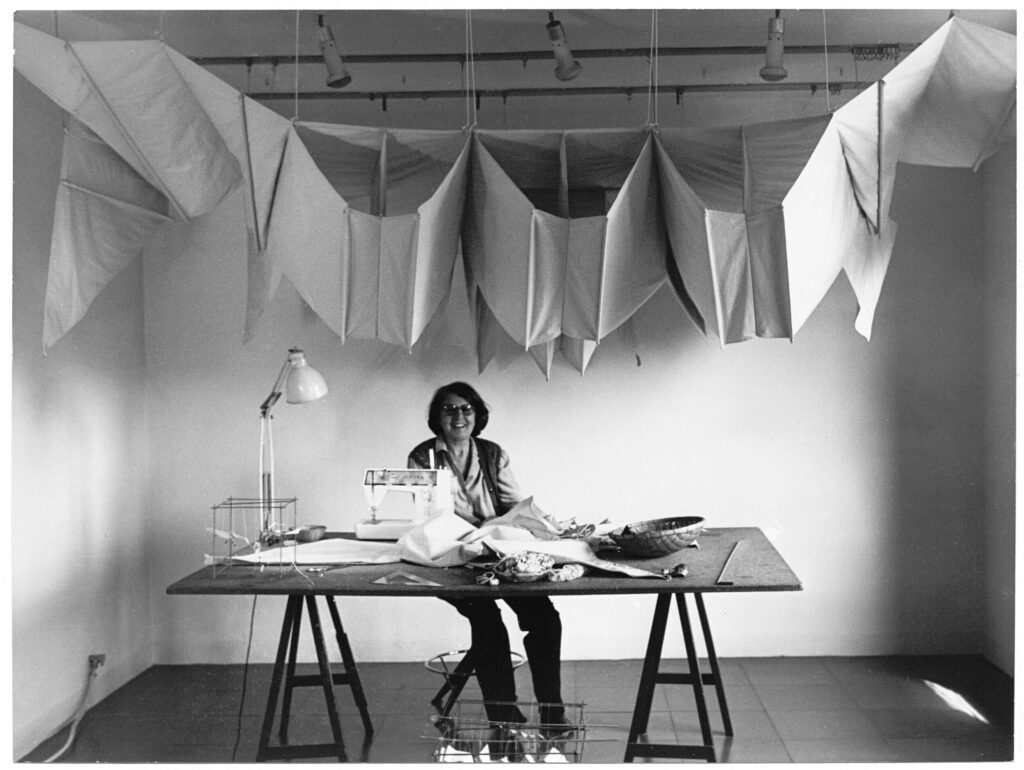
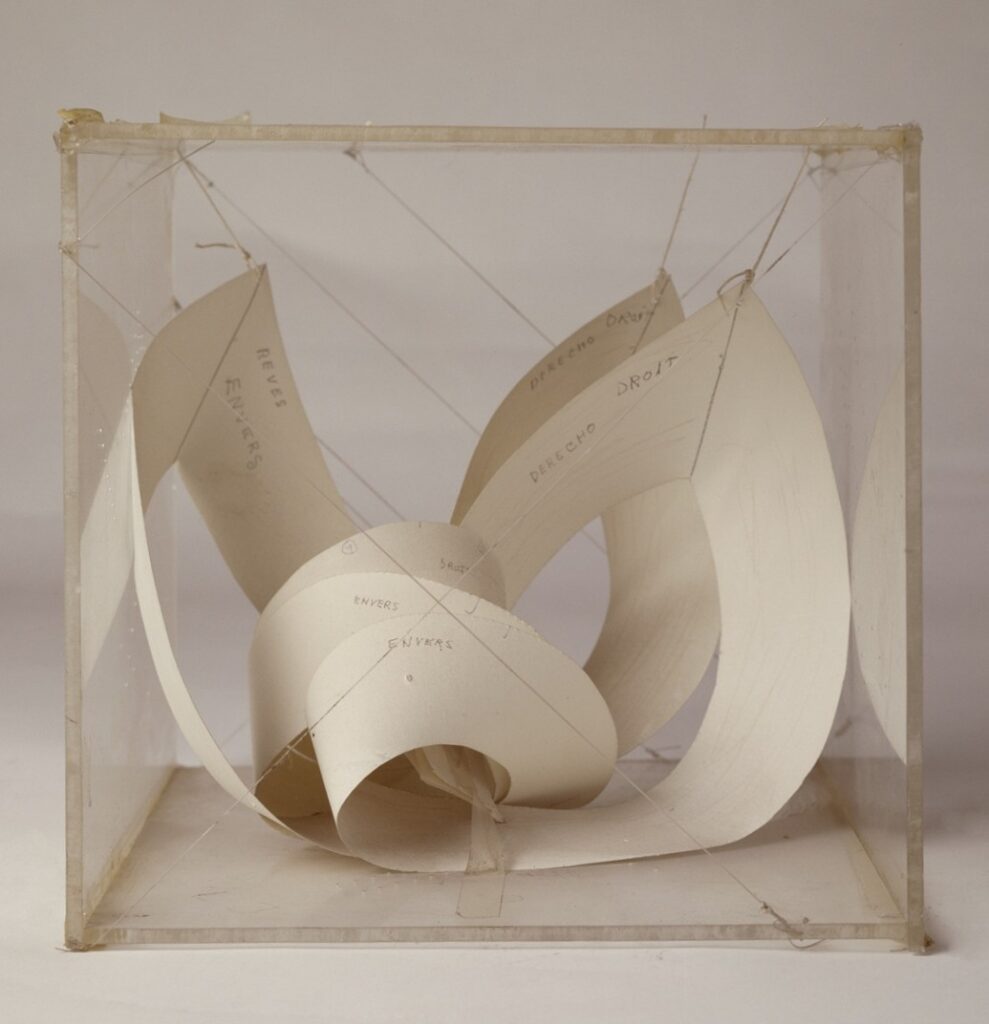
After the dictatorship ended, Muñoz also began titling her pieces in Catalan, her native tongue, instead of Spanish. The Catalan, Basque, and Galician languages were banned in Spain during Francos’s repressive rule, and were only legalized and officially reinstated with the country’s 1978 constitution. Yet even before that, in her 1974 maquette for Ondulaciones, Muñoz had written both “REVES” and “ENVERS” (Spanish and Catalan for opposite) and “DERECHO” and “DROIT” (right in both languages) on her cut paper model, a modest but meaningful inscription that suggests she saw artmaking as space for defiance.
As the country opened to new possibilities, so did Muñoz. She attended numerous biennials, exhibitions, and conferences through the years, becoming part of a dynamic dialogue among international artists that included Magdalena Abakanowicz, Olga de Amaral, Jagoda Buić, Sheila Hicks, and others. Yet Muñoz was still perhaps most marked by the local artisans, teachers, and craftspeople she met on her many travels to Asia and North and South America. These often–unnamed individuals exposed her to a rich range of traditional and ancient textile materials and techniques. A selection from the artist’s personal collection of artifacts—including Amazonian jewelry, a basket, small loom, and woven fish trap—are on display in the exhibition alongside her books on knots, weaving, and traditional costume from Spain and elsewhere. This ever-expanding purview is evidenced in Muñoz’s later script-like works, which appear to draw from Japanese Kanji, Arabic, and other non-Roman writing systems, as well as her later string pieces inspired by Incan khipus.
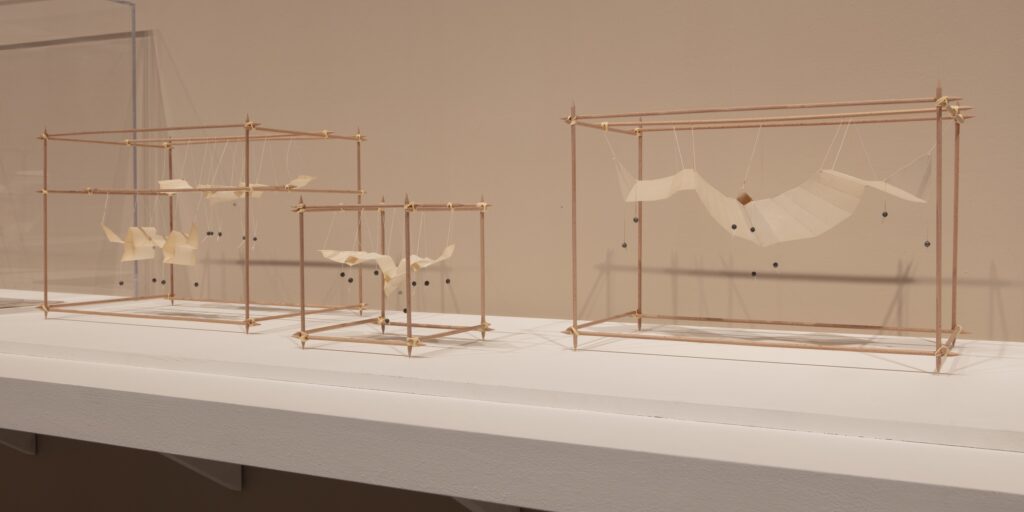
Muñoz learned to make paper by hand at the Cleveland Institute of Art (USA) in 1979, and it became the artist’s primary modality from the mid-1980s until her death at age 85 in 2011. This time period also coincided with challenges in the artist’s health, and with Muñoz’s turn toward the Mahikari Japanese religious movement in the last fifteen years of her life. Mahikari is organized around the practice of Okiyome (often called the Art of True Light), in which members believe themselves to be capable of transmitting a kind of divine light and energy from their hands to purify, protect, and heal. This helped alleviate the artist’s physical pain, and I can’t help but see a connection between Muñoz’s devotion to a spiritual practice based on light and touch and her sublime final handmade paper work.
Paper making is an elemental process that blends water, air, plant fibers, and time, but Muñoz’s paper works also transmit a kind of aesthetic transcendence. The portion of the exhibition dedicated to this last and longest phase of her practice displays an astonishing array of paper-based possibilities, including delicate rows of cream-colored sheets that shiver on the slightest breeze, hanging plum-colored paper pulp threads, and luscious stacks of jewel-toned medallions, some encrusted with small seashells or glistening with mica dust. Anthropologist Ana María Ramo Affonso writes that Muñoz’s titles “open paths in the territories of the imagination,” and this is especially true of these paper pieces, with ethereal and amorphous names like Papallona acuática (Aquatic Butterfly) (1986), Mandala (1984), and Paper plegat a l’espai (Folded Paper in Space) (2007). These works float and spiral endlessly, their illegible scripts surpassing meaning, and celebrating the formlessness of language and ideas. “She always wanted to reach infinity,” Ventosa told me. I think Muñoz made it there.









Contribute your thoughts by leaving a reply