


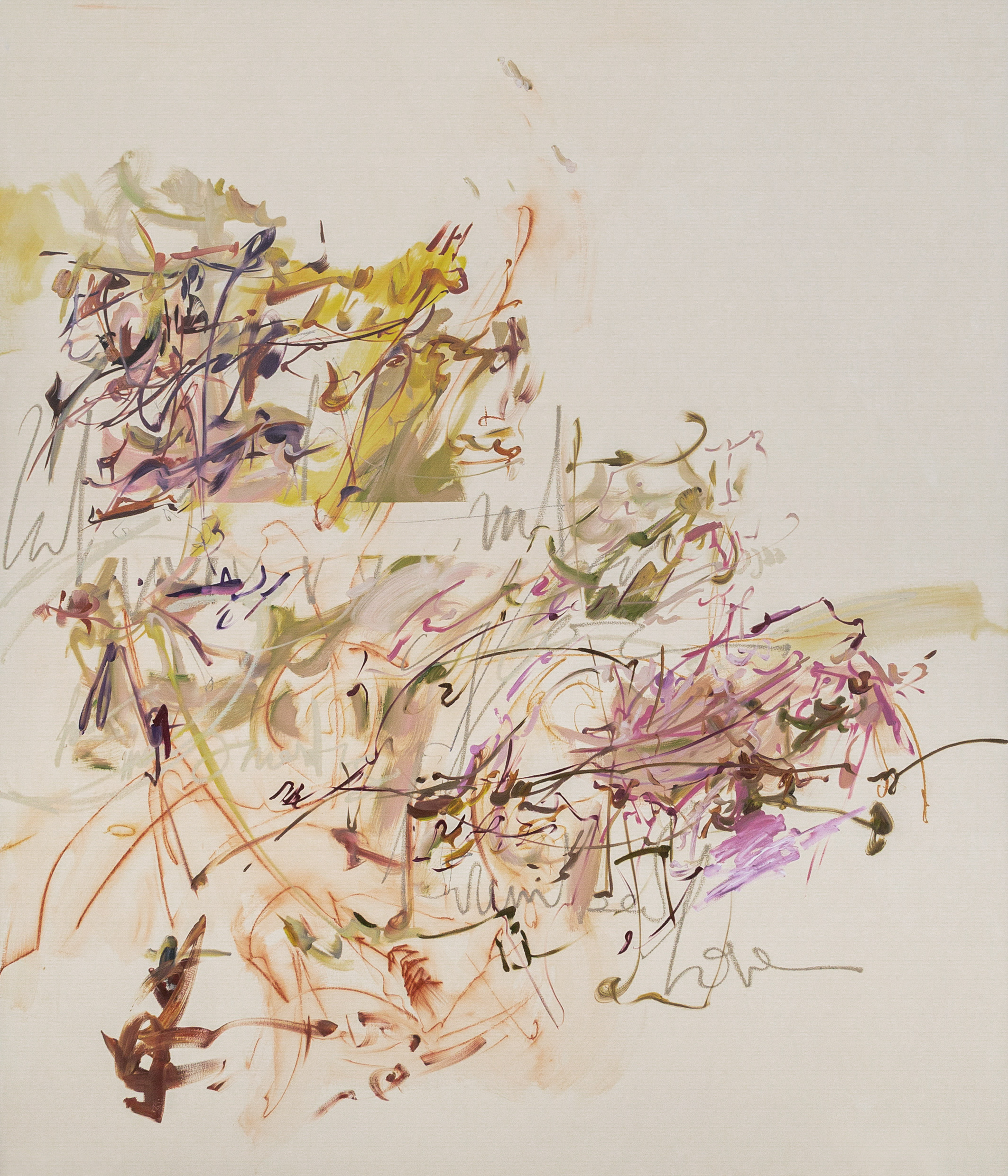




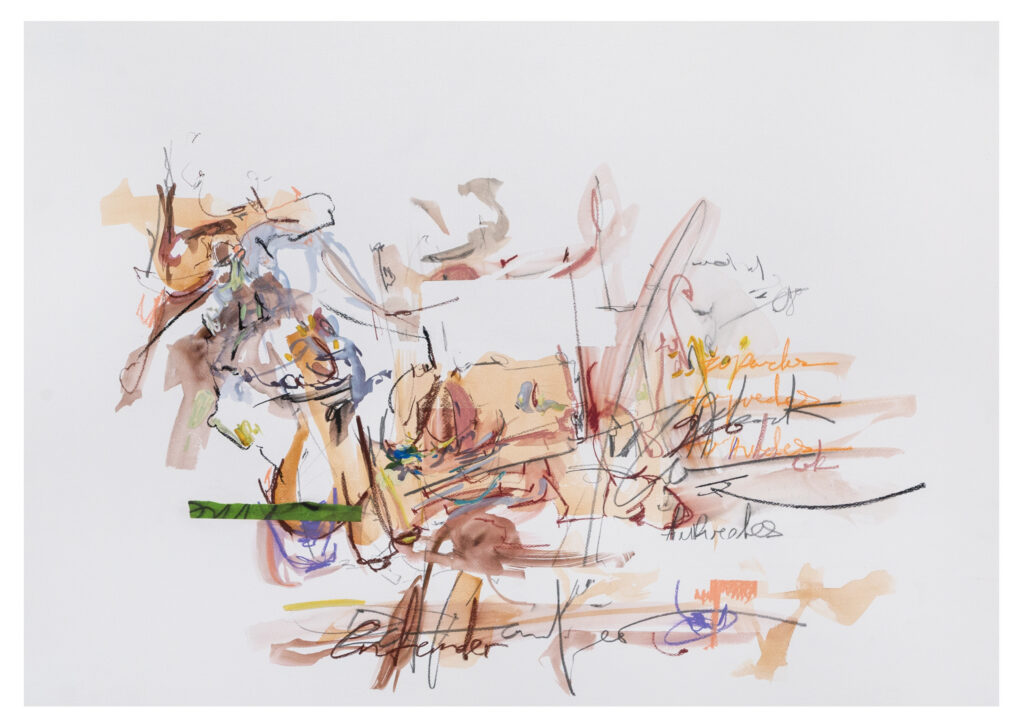
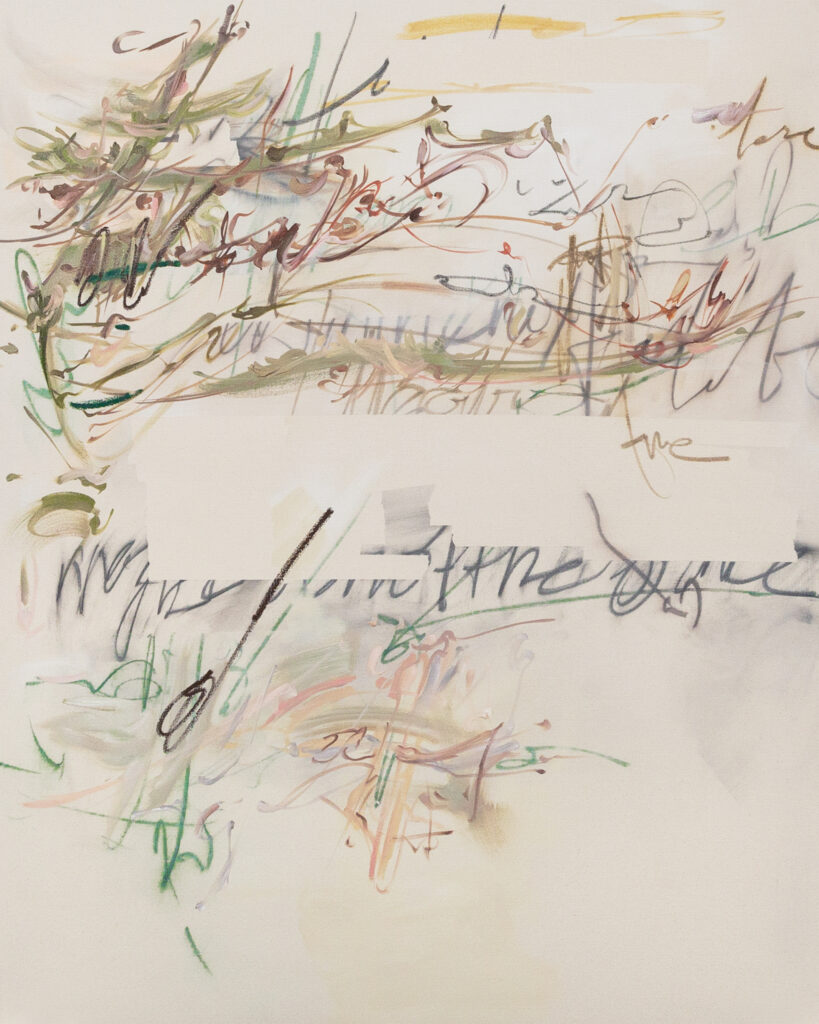
What remains after writing—after the body that held the pen is gone? Carmen Neely’s remains (2026) hung alone on a white wall at Mariane Ibrahim Gallery in the Cuauhtémoc neighborhood of Mexico City. The painting gathers a cloud of yellow ochre, plum, and forest green in its upper left, then loosens toward a flush of magenta, bursting at the right edge. Loops, scrawls, and script-like passes thread the canvas, so that remains reads as a page being written and weathered at once. The title of Neely’s show—a trace beyond the life of the body—reverberates with this canvas, which gestures toward what stays after writing, what is left in the wake of the trace. In the quiet gallery, sitting with the paintings, I felt the presence—the afterlives of the artist’s gesture—while pondering mark-making as trace-leaving.
Neely, who was born in Charlotte, North Carolina, now works between Chicago and Mexico City, creating calligraphic paintings with dynamic mark-making and an earthy palette. This is her first exhibition at Mariane Ibrahim’s newest location—a historic townhouse turned gallery near Paseo de la Reforma—following previous exhibitions of her art at Ibrahim’s Chicago and Paris spaces. Throughout, the artist’s writerly paintings and painterly writings transcend any preconceived divide between image and written word.
Neely’s marks are journalistic, expressive, even cathartic, and her calligraphic abstraction sits in a lineage that Black women have made so much of and been so seldom credited for. Think of Shinique Smith’s inscriptive gestures layered with fabric and bundled materials, or Kenturah Davis’s shadowy portraits built from stamped and drawn letters. Mary Lovelace O’Neal, who passed on May 10, split her time between Oakland and Mérida and painted exuberant, large-scale abstractions. Her 2024 body of work was titled, pointedly, HECHO EN MÉXICO—a mano (Made in Mexico—by hand),claiming the significance of geography and touch. Neely’s exhibition places her firmly within this lineage.
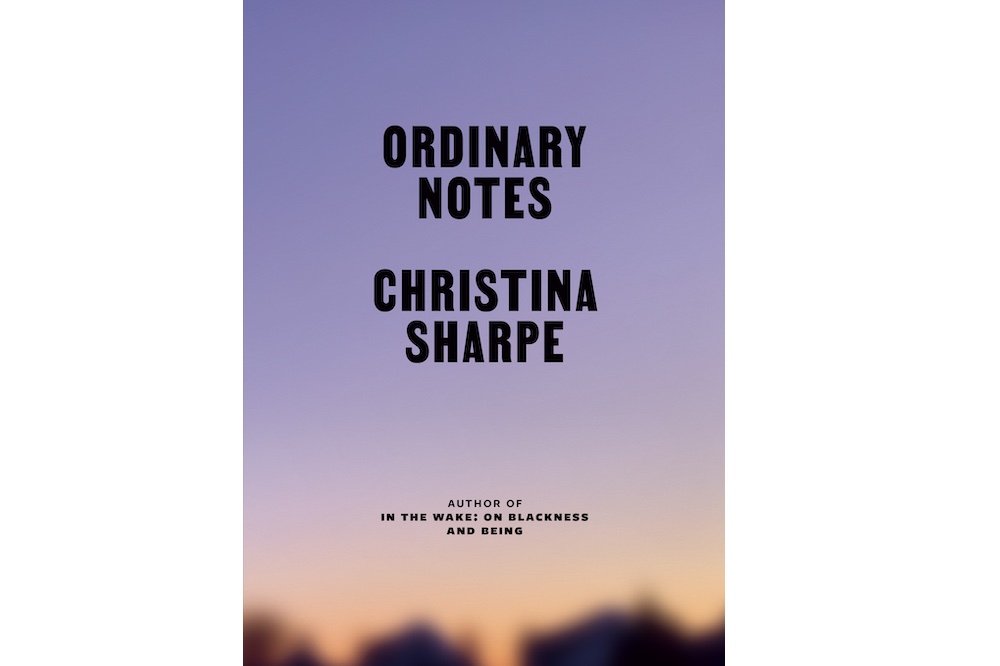
The show takes its title from Susan Stewart’s On Longing, a book that distinguishes speech, which “leaves no mark in space,” from writing, which “leaves its trace, a trace beyond the life of the body.” Neely paints in that gap: the tangled space between what a mark means and what it does, between the legible and the felt, where script is a gesture that refuses to become an intelligible word. Black feminist scholar Christina Sharpe, whose In the Wake underwrites much of what is at stake here, has argued that Black life has been continuously annotated and redacted, and that “wake work” requires, in her phrase, “new modes of writing, new modes of making-sensible.” Neely’s paintings embody such possibilities. Annotation and redaction become forms of authorship, the artist deciding what cannot be read. The artistic decision withholds but also entices; crossing something out can draw more attention to it than leaving it legible.
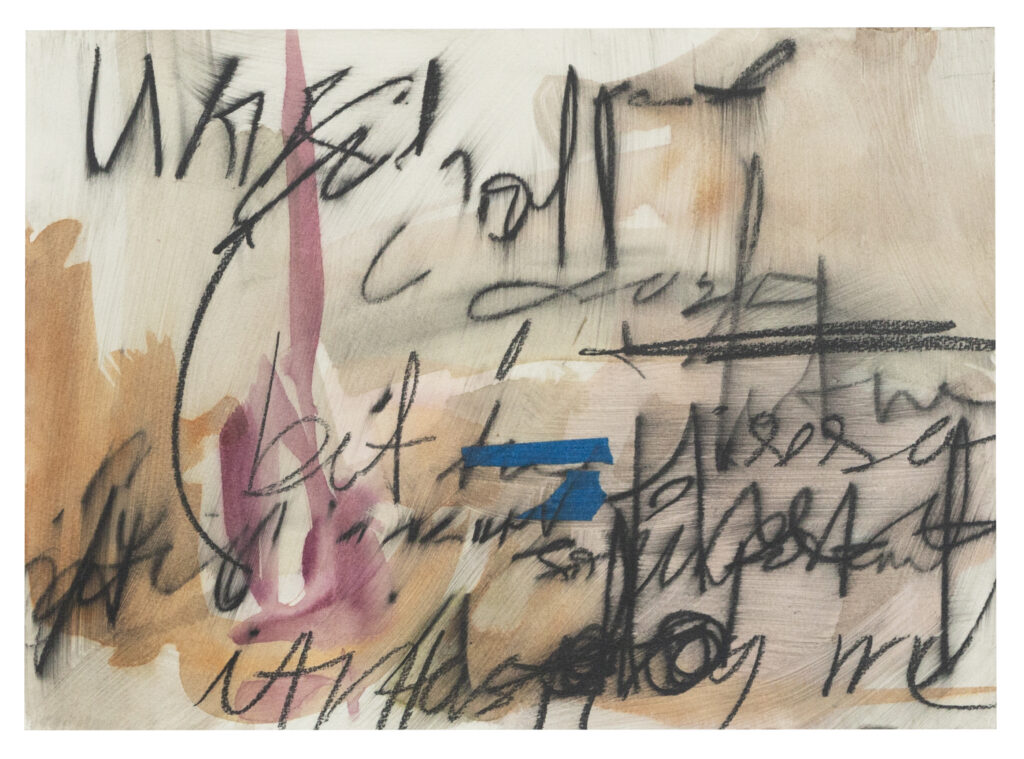
In Keep your own tally (one attempt) and Keep your own tally (a second attempt), small horizontal strips of blue painter’s tape sit mid-canvas. Elsewhere, the tape is stripped away after Neely paints around it, leaving a sharp, rectangular absence evoking censorship, as in never as opaque as you imagine (2025) and home has no name (2026). And in Keep your own tally (a sixth attempt) (2026), the look of tape is conjured by a thick, blue band of oil stick, rendering the tactic itself. Whether sitting on the surface, marked by its absence, or mimicked in pigment, tape obscures and redacts—a withholding tactic that belongs to a long history of opacity practiced by Black women resisting surveillance and hypervisibility. Neely’s opacity is porous, not impenetrable. It is an invitation to a different mode of interpretation, less concerned with decoding and more attentive to how the material meets the canvas. Opacity and connection coexist in the intimacy of the palette, the interplay of what is shown and withheld, the generative unknowability of the marks themselves, the tender closeness that results from all of this. Sometimes we are most attentive to what we yearn to know, and imagination might blossom from a site of redaction.
The wall’s deep, saturated color—not quite salmon, not quite terracotta—recalled Luis Barragán’s houses in Mexico City and Jalisco, where solid planes of magenta and coral build a sensuous atmosphere. The painting glowed in the intimate room: a cream ground crossed by a horizontal pull of plum, sienna, and red; charcoal architecture ghosting through the upper field; a denser, almost botanical thicket gathering toward the lower middle. The title is fitting—Neely’s surface is more open than the dominant visual language of opacity allows. Opacity here is not a wall but a practice; layers of mark and pigment do not conceal so much as invite, and other modes of reading are welcomed alongside what is withheld, such as affective, haptic encounters with color.
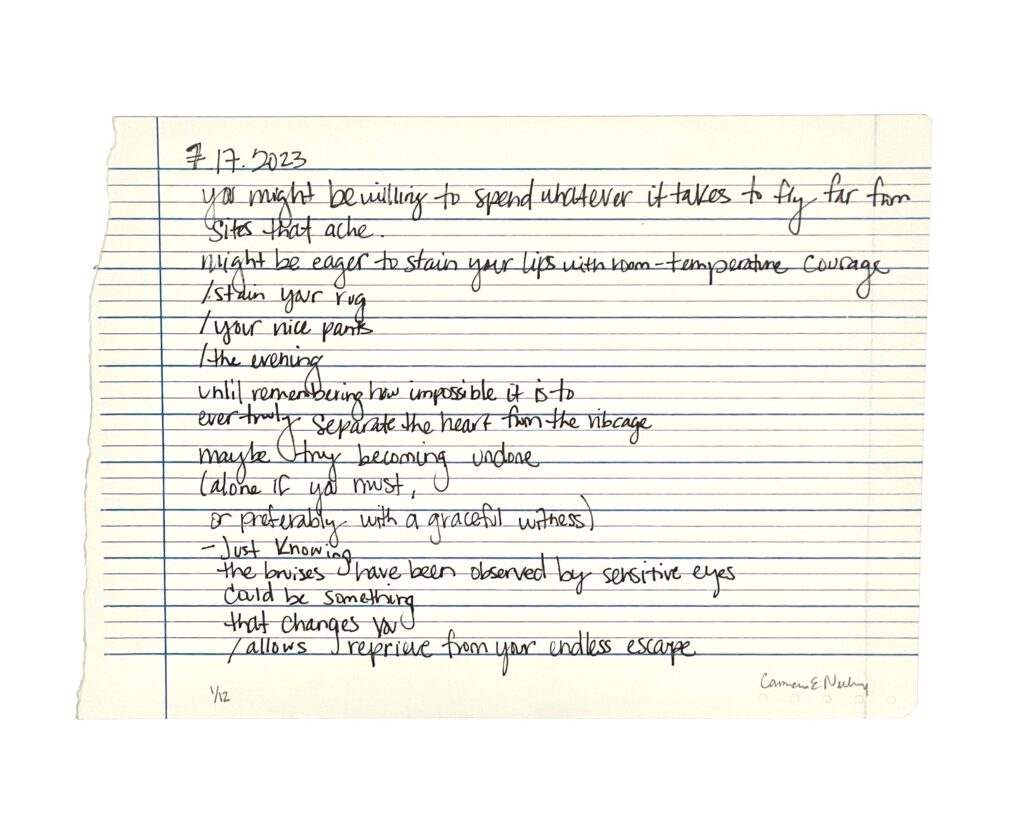
The titles are the show’s other poetry—resisting the retelling, so lovely she went unnoticed, overlays of notation and [withheld] breath—each a soft deferral of complete disclosure. Mostly, plain language lives in titles like this, running parallel to the differently legible, on-canvas marks, but there is one small lithograph in the exhibit, 7.17.2023 you might be willing to spend whatever it takes to fly far from sites that ache (2026), which reproduces Neely’s own handwritten poem. The loose handwriting is a mix of cursive and print on lined notebook paper, and the letters drop below the ruled lines. The poem reckons with ache and escape—what we’d do to flee places that wound us and what changes when, instead, others witness our pain—and makes the offer of “becoming undone / (alone if you must, / or preferably with a graceful witness).” There are lines that recalibrate everything around them: “the bruises have been observed by sensitive eyes / could be something / that changes you.” Carry that passage back into the calligraphic canvases, and those script-like marks read differently.
In another room, Neely’s marks extend beyond the canvas, across the architecture in graphite and pastel—improvisational lines, illegible traces, overlapping scrawls, coded inscriptions. The wall becomes a page. Like her life across borders, the work refuses to stay in one place. Every Monday during the exhibition’s run, when the gallery was closed, Neely returned alone to paint and write for several hours—a private catharsis, durational and accumulative—stacking the new canvases on the floor.
To write beyond borders like this is a fugitive gesture. It is the kind of new writing Sharpe envisions—script and mark refusing to stay inside the canvas, the wall, the page. And it is also where she lives: a Black woman moving between Charlotte, Chicago, and Mexico City, where geography itself becomes a mode of making sense.
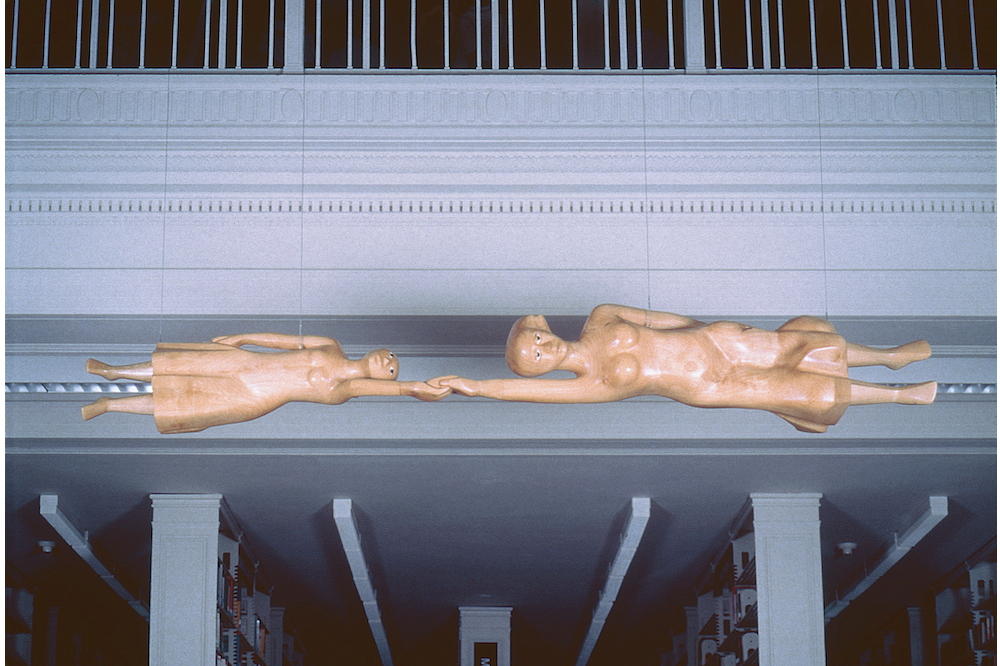
This is Neely’s first solo exhibition in Latin America, and the first since she began splitting her time between Chicago and Mexico City—the latter a place where, as she recently put it, speaking in Spanish with Daniela Gutiérrez for M Revista de Milenio, she is routinely struck by “the clarity with which people coexist with their ancestral influences.” That observation reminded me of Elizabeth Catlett, the sculptor and printmaker born in Washington, D.C., in 1915, who arrived in Mexico City in 1947, became a Mexican citizen, and stayed for the rest of her life. Catlett’s life in Mexico offers a blueprint: a Black woman artist who crossed borders not in exile but in expansion and made some of her most politically alive work there. Her 1968 red cedar sculpture Homage to My Young Black Sisters—a life-size figure carved in Mexico, fist raised, a void at the womb—was addressed to Black women in America. Nearly sixty years on, the spirit of that address feels alive in what Neely is doing: a politics less concerned with legibility than with protecting Black women’s interiority, abstraction itself a mode of privacy. It is a decolonial vision that refuses the border as an organizing principle of culture.
The gallery’s Porfirian-era townhouse, its architecture a remnant of elite, Eurocentric modernization and blanqueamiento (whitening) under authoritarian rule, is disrupted by Black women’s curatorial and aesthetic processes. Mariane Ibrahim is, to my knowledge, among the very few Black women–led art galleries in Mexico.
What sticks with me from the exhibition is the experience of longing—that orientation toward an object or meaning just out of reach. I had arrived in Neely’s exhibition anxious to read the marks, to translate the script, to fix language onto the paintings as if to make them reveal their authentic meaning. By the time I was standing in front of the wall of writing at the gallery’s center, that anxiety had quieted, replaced by curiosity about how the brush had moved, where the tape had landed, what the soft palette was doing for the eye. What remains in the mark-making are traces of an inherently unknowable interiority. There is something to witness, but we cannot know it all.








Contribute your thoughts by leaving a reply