






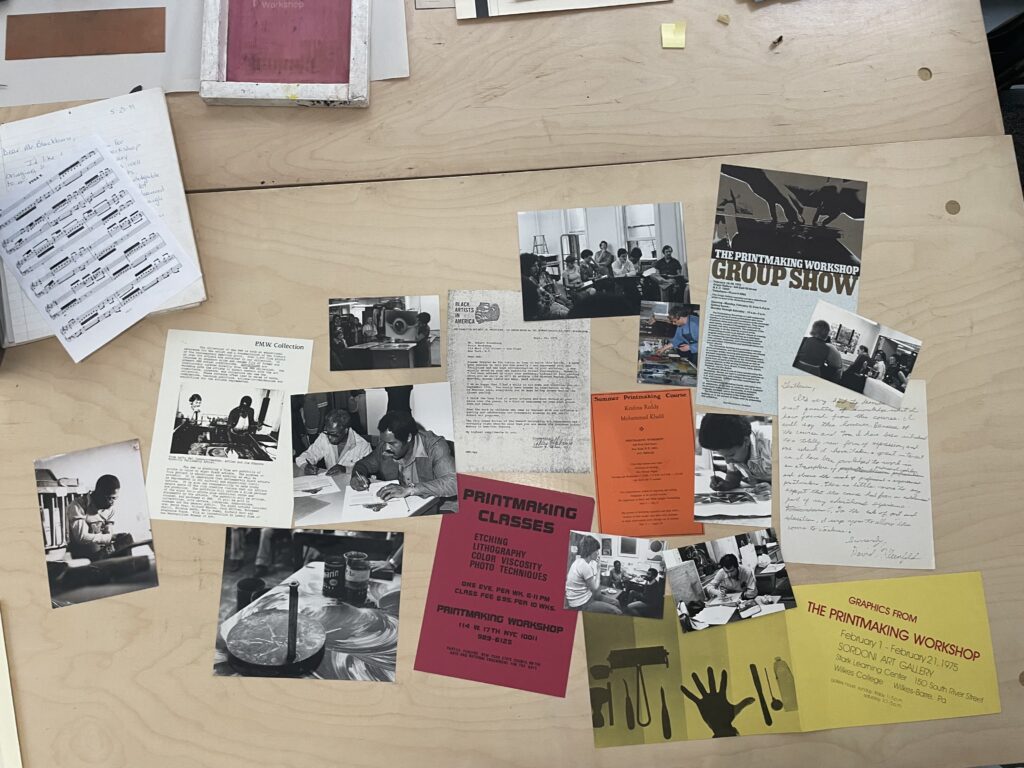
I remember standing within the Robert Blackburn Printmaking Workshop—the New York City atmosphere that the artist brought to life with his peers, holding items from the printshop’s archive of bootleg cassette tapes; class flyers from the 1970s; letters of appreciation addressed to Blackburn; and gelatin photographs of now-famous artists such as Vivian Browne, Ed Clark, and Mavis Pusey pondering over artwork. Between the prints and ephemera, I saw the artists within the printshop’s history—from then to now—emerge as stars within a broader constellation defined by Blackburn’s prismatic, boundary-pushing approach to artmaking. I’d been asked to curate the traveling exhibition that became Press & Pull: Two Decades at the Robert Blackburn Printmaking Workshop, opening next in Chicago, and already this broad index of prints was etching itself into my memory and reshaping my vantage point.
Never in a million years did I expect printmaking to change my way of seeing. Beyond the few prints I revered for their historical significance in modern and contemporary art history (Francisco Goya’s etchings, Elizabeth Catlett’s linocuts, and David Hammons’s body prints—artworks on paper that move histories of terror, resilience, and experimentation into focus), I didn’t think much about printmaking. But my encounter with the Blackburn workshop, a space inseparable from the legacy of its founder, left me reconsidering the medium through the political shifts and social bonds that define its aesthetic force. As a pioneer of lithography in the United States, Robert Blackburn arguably carved out a pathway for the Pop Art Movement to flourish. He imagined his printshop as a reincarnation of the spaces that made his creative life possible, offering his community of devoted artists and budding practitioners an ecosystem where magnetic encounters of knowledge exchange and cooperation are evident on paper.
Since 2005, the Elizabeth Foundation of the Arts (EFA) has managed operations of the Robert Blackburn Printmaking Workshop, continuing Blackburn’s desire to make printmaking accessible while sustaining a community-centric ethos he spent decades cultivating at the expense of his own time and creative practice. It was Jazmine Catasús, the printshop’s artistic director and master printer, and Essye Klempner, the director of programs and partnerships, who first sought to organize an exhibition honoring Blackburn’s impact on global contemporary art, tracing the artistic and political vision that connected the generations of artists who have passed through the printshop.
In 2024, I met Catasús at the Cue Foundation’s opening reception of Keli Safia Maksud’s Worried Notes in Manhattan. She’d offered me a tour of the printshop, which I gladly followed up on. There, I first eyed fragments of the archive, including intaglio prints by the grande dame Faith Ringgold—the same day she joined the cosmos. The tour was the beginning. Later that year, I reviewed Elizabeth Catlett’s retrospective at the Brooklyn Museum for Art in America, in an essay that compelled Catasús and Klempner to invite me to curate the exhibition about Blackburn. And in our initial conversations about Press & Pull, the three of us were passionate about anchoring the Workshop’s past twenty years of impact within Blackburn’s guiding principles of creative excellence. To Blackburn, nothing was more important than collaboration and determination. He famously stated, “No one is whole unto himself; he shares with other people.” However, he also commanded that people meet their work with divine seriousness.
Born in Summit, New Jersey, in 1920 to Jamaican immigrant parents, Blackburn became Harlem’s adoptive child following his family’s relocation to the neighborhood in 1927. There, the Harlem Renaissance was in full swing, and his early years were shaped by an atmosphere made sticky by the spiritual happenings and life attitudes shared among artists, poets, musicians, and philosophers—all embracing a new science of self-expression that celebrated Black folk vernaculars and their evolving adaptations. Though the Harlem Renaissance gave him a strong foundation, Blackburn truly came of age during the Works Progress Administration era. He was the beneficiary of social clubs and government-funded community programs, and spent his teen years joining Charles Alston’s Studio 306 salon and studying with the likes of Augusta Savage at the Uptown Arts Laboratory, where he befriended contemporaries Jacob Lawrence and Ronald Joseph. In 1938, near the end of the Great Depression, Blackburn studied lithography with Riva Helfond, producing lithographs such as Refugees (aka People in a Boat) (1938), a monochromatic print of five Black people sailing onward.
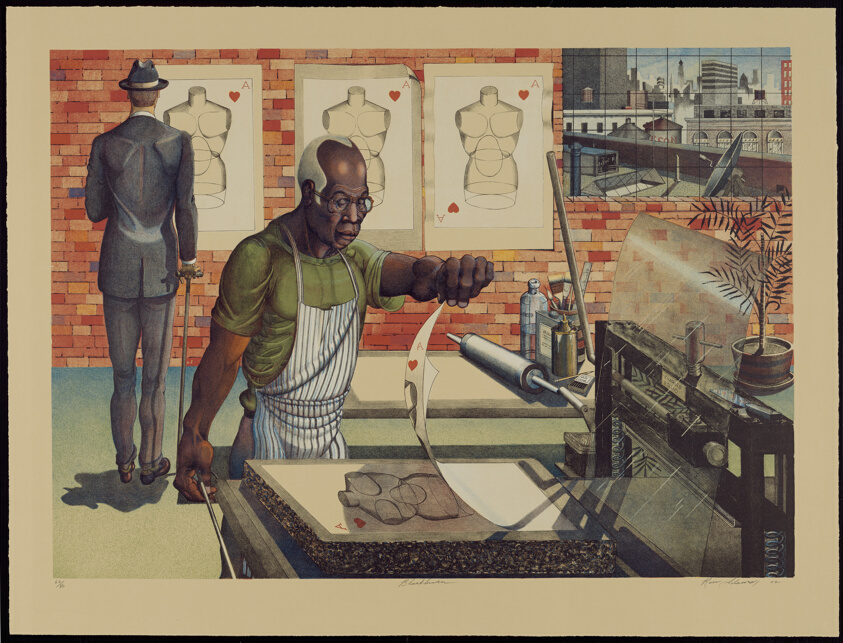
After high school, Blackburn attended the Art Students League (1940–1943) to learn color lithography from Will Barnet. Blackburn’s precision and work ethic were so impressive that any hierarchy between teacher and student soon dissolved into friendship. Around this time, Blackburn was transitioning from a style rooted in Mexican modernism toward a more expansive visual worldview shaped by the layered environments that formed him: Harlem’s cultural dynamism during and after the Renaissance, the visual language of the Global South and European modernism, and the shifts in popular music lead by Black consciousness. His formative years were a microcosm of the cultural movements, leftist ideologies, and artistic expressions shaping his and his peers’ decentralized art practices; they believed art could elevate the political imagination. These same practices ultimately informed the Workshop.
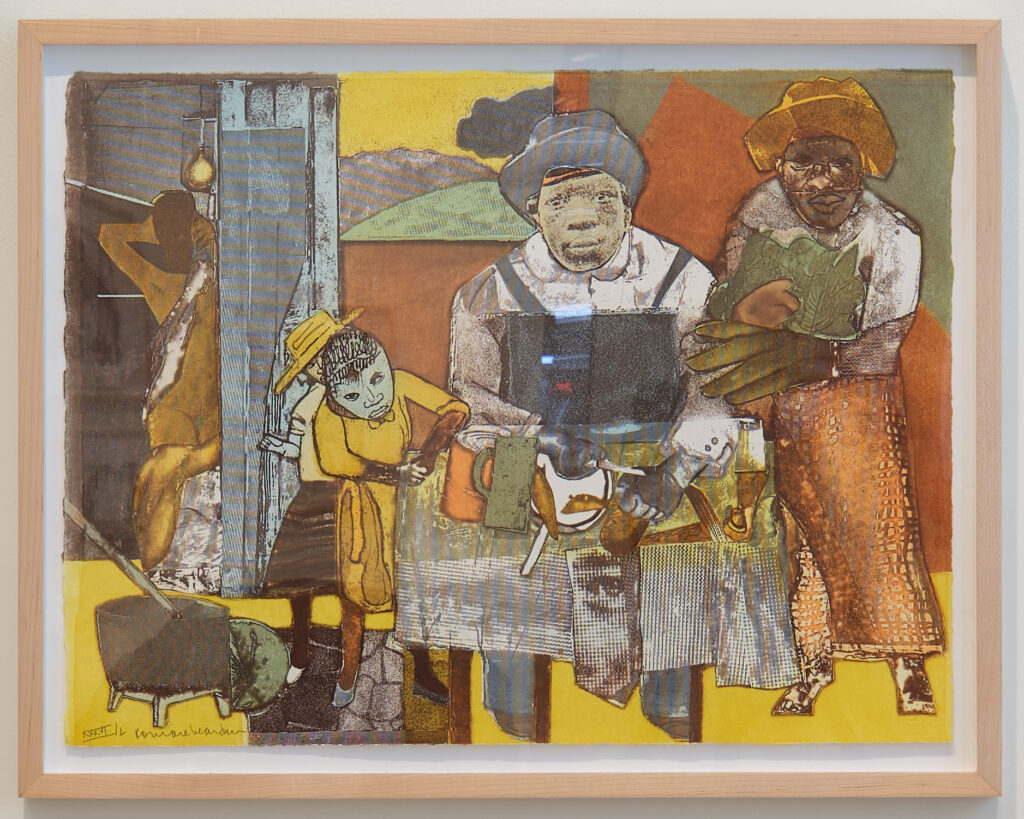
As I read archival news clippings and heard oral history testimonials, what stood out to me most about Blackburn was the scope of his generosity. The flux of creative programs Blackburn experienced throughout his adolescence instilled in him a deep gratitude for both the medium of printmakers and the educators who refined his practice. He’d made his own path, through apprenticeships, salons, and friendships, since higher education wasn’t financially possible for him. And at the tender age of twenty-seven, Blackburn saved enough money from working odd jobs to purchase a lithography press. In 1947, he founded the printshop, converting his Chelsea loft into a workspace that offered studio time and a broad range of printmaking classes to artists in his community. Some of the Workshop’s earliest participants included artist-peers and dear friends like Romare Bearden, Betty Blayton, Camille Billops, Elizabeth Catlett, and Charles White. During a time of intense racial segregation, Blackburn went against the status quo to welcome people and ideas from around the globe, establishing a third space where folks could gather, refine their craft, and support one another. The practice of artists like Bearden, Blayton, and Billops were changed by their time in the printshop. Bearden’s bluesy, expressionist style became ubiquitous within the cultural zeitgeist because prints like The Baptism (1972) could circulate widely. Billops’s prints synthesized transformative ideas around Black identity, gender, and cultural hybridity that later emerged in her filmmaking practice.
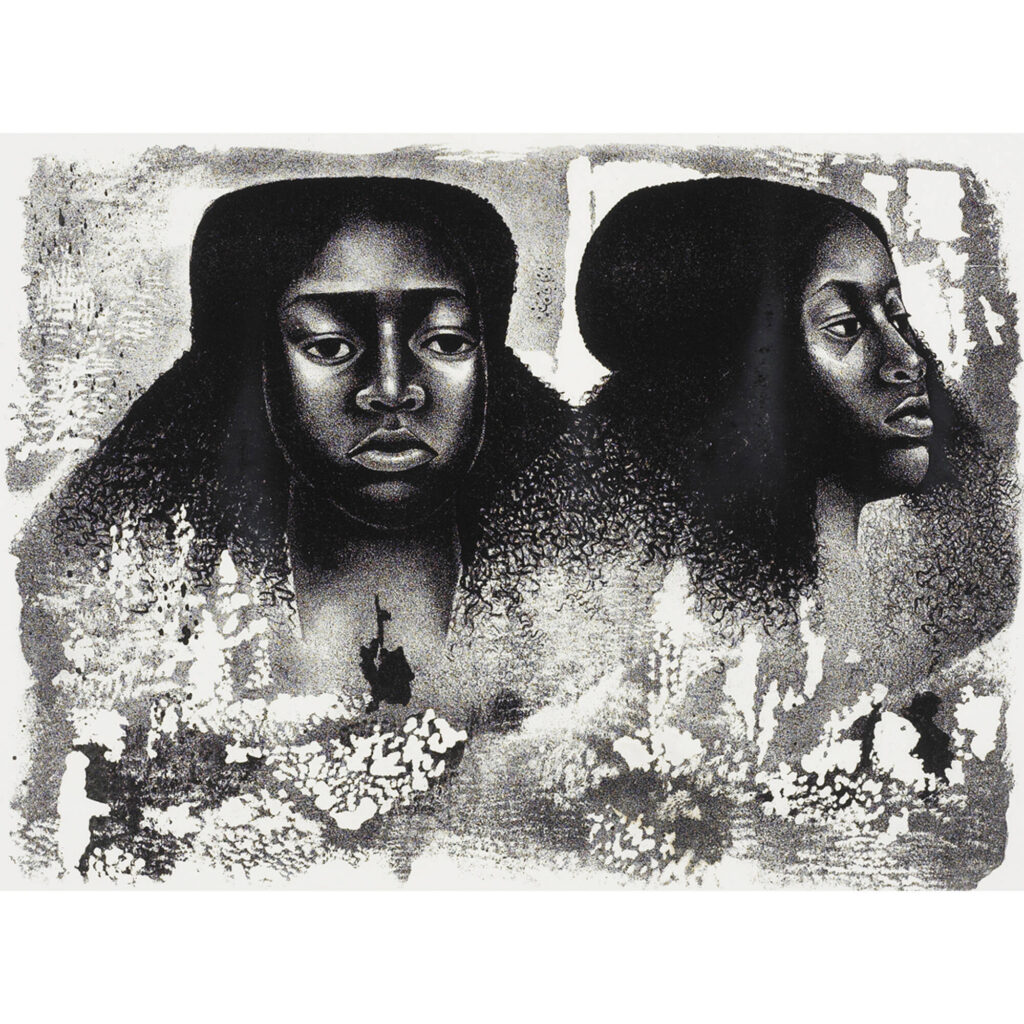
White and Catlett met Blackburn at the Arts Students League upon their arrival in New York in 1942. Though after the 1930s, Blackburn’s artworks had veered away from the social-realist perspective that, along with radical visions that drove White’s and Catlett’s practices throughout their lifetimes, their artwork still had some striking resonances. Blackburn’s prints of Black mothers, such as Negro Mother (1944) and Black Madonna (1947), honor Black female subjectivity and mirror Catlett’s feminist purview. But Blackburn consistently made space for artists regardless of whether they shared his sentiments or aesthetic tendencies, including women like Mavis Pusey, Emma Amos, Dindga McCannon, Kay Brown, and Mary Lovelace O’Neal, to produce and exhibit their work. The Workshop, being a place for all, was built up little by little by everyone. Black artists were invited to experiment, women had a reliable space to perfect their skills, and immigrants without means were offered a place to print and work. Most important, artists became educators for adults and children alike, bridging the gap between institutions and resources that have kept many disenfranchised. By design, the Workshop became an intergenerational environment for education, mentorship, and collaboration, empowering artists both new and well-versed in the genre.
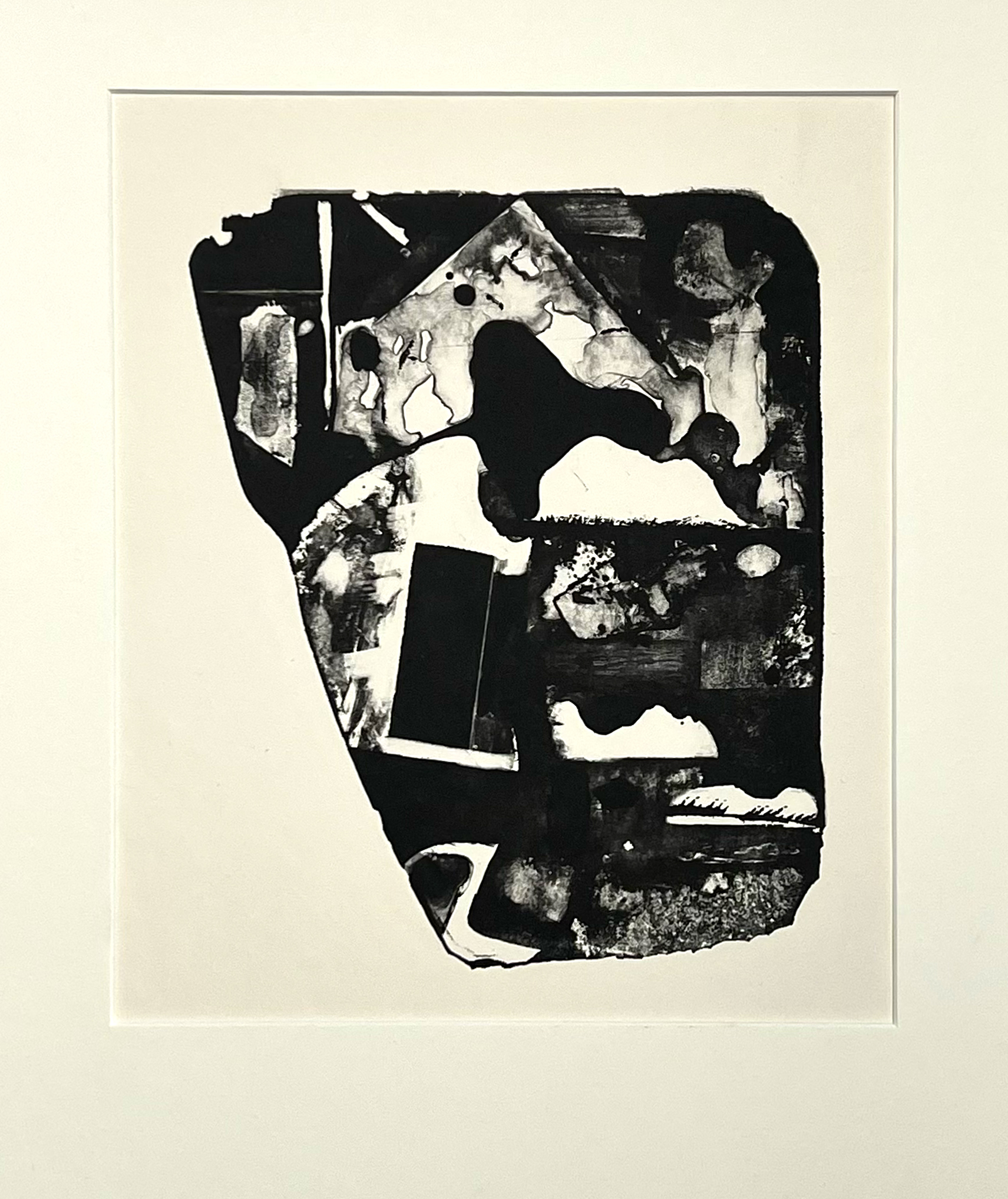
Outside of the printshop, Blackburn was known for his editioning work for contemporary artists at Universal Limited Art Editions (ULAE) between 1957 and 1963. Tatyana Grosman founded the ULAE in West Islip, Long Island, in 1957, immediately hiring Blackburn to help artists such as Helen Frankenthaler, Grace Hartigan, Jasper Johns, and Robert Motherwell produce prints (though in public documents on ULAE’s history, Robert Blackburn isn’t recognized for his instrumental contributions to the organization). While he was printing for Robert Rauschenberg one day, Blackburn accidentally cracked the lithostone—an unfortunate incident that became a legendary visual disruption. The negative space left by the broken stone became Rauschenberg’s Accident (1963), a piece that celebrates random encounters as evidence of a pure creative spirit. Though Blackburn’s mistake initially made him sick with grief, he came around once he began to intentionally break off the stone in his own prints. For Untitled (Broken Stone) (c. 1960s–1971), the nearly blacked-out register bounces between tonal washes and amorphous shapes that prophesied the stone breaking on the edge. What’s prolific about his way of seeing was how he made the stone the artwork itself, using the printmaking apparatus as a framework for abstraction.
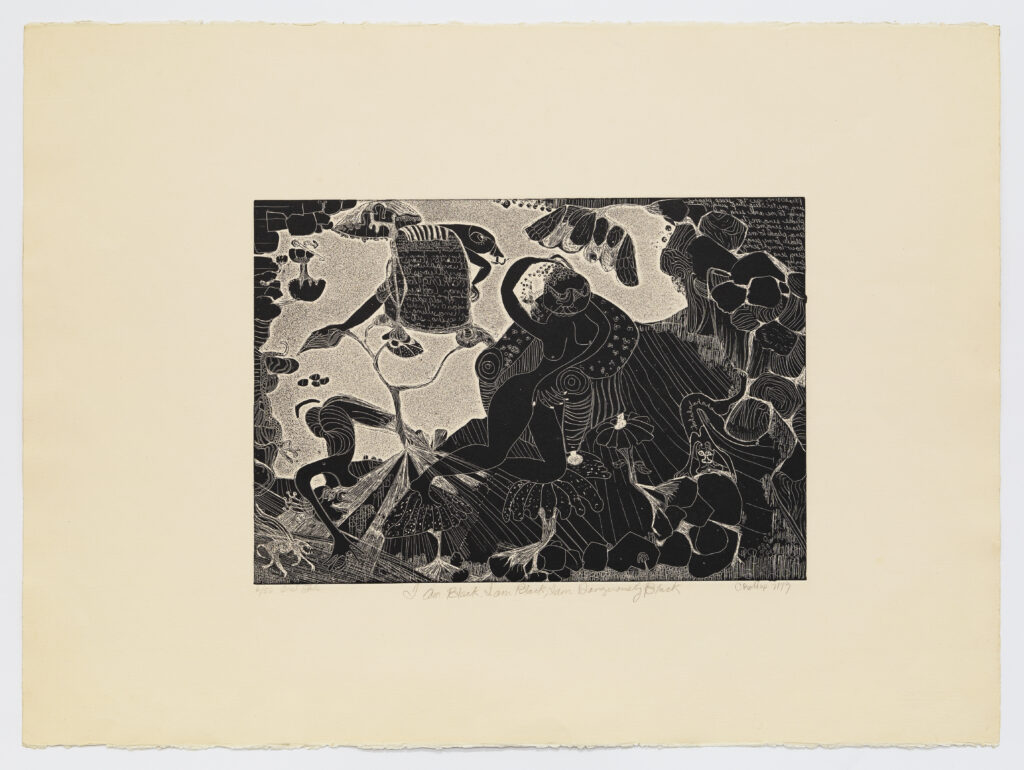
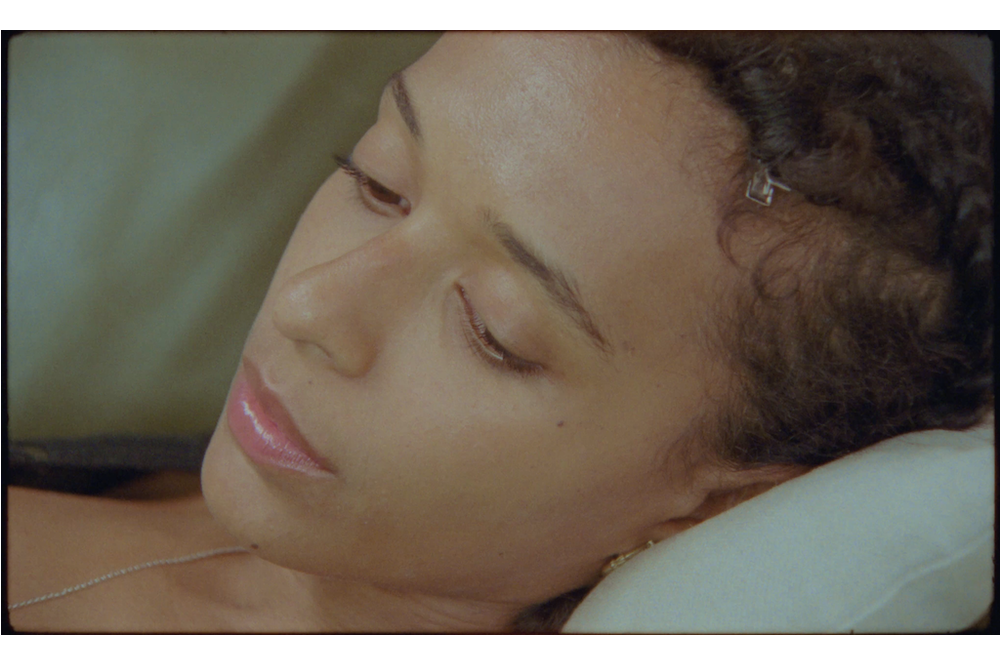
We drew from this web of relations among the archives, the artworks, and the Workshop’s history when forming the exhibition floor plan. The selection of prints from the last two decades of the Workshop, the years since it became an extension of the EFA, traces the evolution of the graphics boom Blackburn helped pioneer at ULAE into our present. Suddenly, the tusche residue of Blackburn’s Broken Stone became the connective tissue between the gelatin odalisque of Billops’s I am Black, I am Black, I am Dangerously Black (1973) and the fragmented frames of Nontsikelelo Mutiti’s autobiography of my mother (2024) (the latter printed by Catasús). Billops’s black-ink-and-white etching of a reclining nude goddess recalls the look of Hellenistic vases. Created during the Black Power era, her print emboldens the female erotic as the lifeblood fueling Black freedom dreams. Mutiti’s photolithograph echoes a different sentiment of Black femininity rooted in care and recovery. Sharing a title with Jamaica Kincaid’s third novel, the triptych features two illusory frames made of bobby pins, becoming a skeletal outline for a photograph without actually presenting one. We’re introduced to photograph only in the final print, where the labeled caption and dates are made visible to all. Mutiti thus skillfully repurposes the conceptual nodes of photography to author an image of her mother that also redacts her physicality.
I was also enamored of Charles White’s 1949 lithograph John Brown (printed by Blackburn) and its abundant connections to Lizania Cruz’s lithograph and chine-collé piece Evidence 071: Frederick Douglass and the Commission of Inquiry (2023) (printed by John Andrews). White’s bust is a tribute to an abolitionist lynched in 1859, and Cruz’s print is an investigation of Douglass as a proxy for the U.S. government during a trip to Santo Domingo, in the Dominican Republic. White believed that art should be used as propaganda to support liberation movements; thus, the artwork marks the historical significance of Brown’s fight for Black Americans’ freedom and helps circulate narratives that can vanish under authoritarian regimes. Similarly, Cruz underscores how printmaking has been used to dehumanize Black and Brown people—especially before the advent of television; however, she interrogates the way Douglass has played into U.S. imperialism. Though separated by decades, each artist and master printer mobilized print as a political and aesthetic technology, one that can advance abolitionist discourse while exposing how people, text, and media shape historical memory.
Today, the printshop is located on 323 West 39th Street, in the heart of Midtown, Manhattan, but from the inside, you can hardly tell. The city’s blaring alarms, incessant chatter, and underground rumblings—akin to the ecstatic dissonance of Ornette Coleman’s Free Jazz—give way to the ambient sounds of thick ink rolling across plexiglass, levigators smoothing out limestone, and paper submerged underwater. There’s quite a musicality to the printshop and the pure tones emanating from printmakers in real time: metal clanking amid manual labor, voices undulating with intimacy, heavenly gasps at the sight of a miraculous pull. Printmakers sounding off their self-expression. Blackburn’s prints—hung in an archive room, or its reproductions nestled throughout the workspace—themselves seem to operate with a similar improvisational energy: layered, rhythmic, and abstract. Photographs of Blackburn caught mid-roll, press, and pull surround each print station, generating moments where the past and present reality converge into a continuum, radiating the action of imagining otherwise: leveraging a collective power to define what’s possible.
The author extends a heartfelt appreciation to art historian Ethel Reina for her support with the exhibition text for Press & Pull.








Contribute your thoughts by leaving a reply