








“I don’t ever want to live in one place again,” Paul Thek declares in a letter to Peter Hujar in 1968, “too many pretty places in the world.”
Both Paul and Peter are deeply New York artists; that’s the box in which I’d placed them in my mind, anyway. The pair inhabited the much-mythologized downtown art world of the 1960s, ’70s, and ’80s. Paul became known for a frenetically varied practice encompassing intricate installations, paintings on newspaper, and startlingly meaty sculptures. Peter’s sparse photographs reveal profound empathy and a deep hunger for beauty at its most fickle and raw. And yet lacing through their radically different artistic impulses is a sharp unease, a sense of placelessness that each artist’s attachment to place only amplifies. This unease takes form in Peter’s pull toward the catacombs beneath Palermo, Italy, which he obsessively documents, and in Paul’s painted Sicilian landscapes that scab and bleed like jagged wounds.
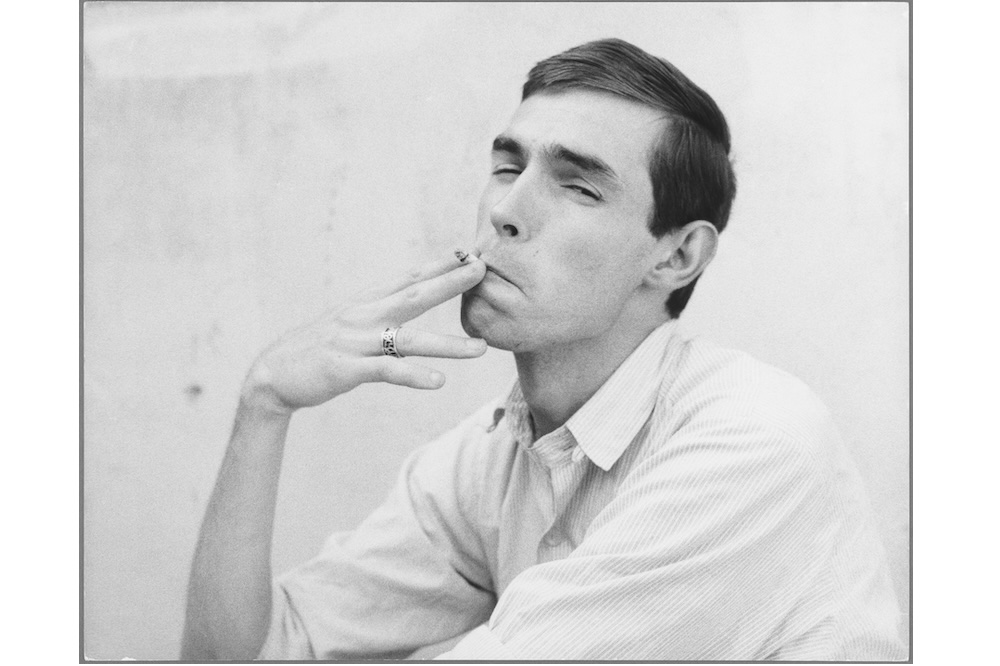
The pair first encountered each other far from New York. Paul was living in Coral Gables, Florida, in 1956 with his then-partner, Peter Harvey; Peter was traveling with his then-partner, Joseph Raffael, when he met and photographed Paul, though they would not become lovers until 1960. Those portraits—Paul’s angular figure sprawled across a bed of pine needles beneath spindly trees, Paul lost in thought on the couch as light streams in through sliding glass doors—foretell the fragile peace they later found amid the lanky forests of Fire Island, though home is far too fixed a word for the broken blur of placid summers that made up this shared world.
At a reading I attended at Performance Space in New York in April 2025, historian and filmmaker Susan Stryker pondered the deep kinship between queer and anti-Zionist Jewish communities. Maybe, she mused, it stems from a shared instinct to create community laterally, rhizomatically, rather than lay claim to a piece of earth. I’ve thought of this often over the past year as I’ve flitted from place to place and scrambled to keep up with queer artist friends doing the same, some floating between Brooklyn sublets, others traversing far-flung streets on meager stipends. What seems to hold this tangled web intact is a collective longing for home divorced from the desire to drive a flag into the ground and proclaim it to be the place.
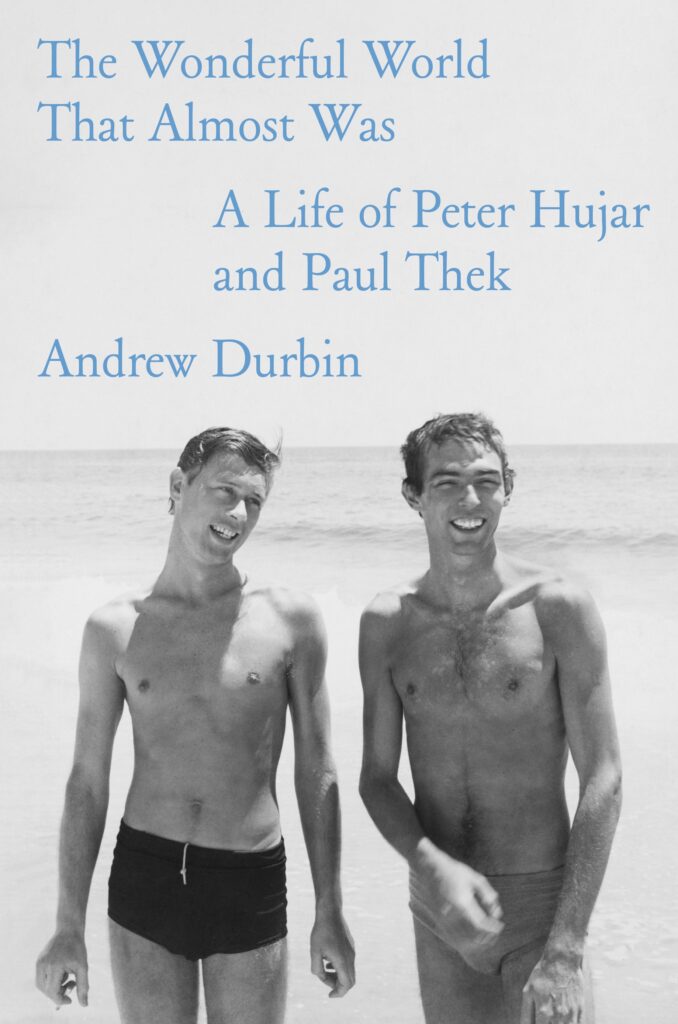
The elegantly sprawling ecosystem that Andrew Durbin constructs in his dual biography of Peter and Paul, The Wonderful World That Almost Was, brought this observation to the forefront of my mind yet again. (I refer to Paul and Peter by their first names in part because Durbin does so, and in part because the book is written rather novelistically and therefore seems to merit a stylistic departure.) Through meandering descriptions of myriad places and Peter’s and Paul’s comings and goings therein—the imprints they left behind and the indelible marks each microworld made on them—the book spins interwoven tales of two artists whose lives unfolded on the peripheries.
Durbin crafts complex portraits of Paul and Peter with a strikingly light touch, not for lack of research or primary source material, but seemingly in acknowledgment that their interior lives cannot be known and to try would be its own sort of violence. Instead, he brings them to life through their relationship to place, crafting a series of unstable images more akin to Ana Mendieta’s Siluetas fading into disparate landscapes than, say, FX’s Love Story.
Paul, Durbin notes on at least one occasion, always dreamed of escape. Through letters (of which Paul wrote many), sketchbooks, and interviews, he maps the artist’s pursuit of the sublime, which he seemed to believe lay at the margins of the Earth, where water meets land. Durbin traces Paul’s wanderings from Florida between 1954 and 1958, following his student days at Cooper Union, to summers in Rhode Island and Massachusetts, to a remote corner of Sicily, reserving the most poetic language and tender analysis for Paul’s beloved Fire Island. No matter where he was, Paul drew and painted pieces of his surroundings—an orange rind, a feather, a lone figure diving into the sea. (Some of these are on view at Pace Gallery in New York now.) The practice quelled his loneliness when he was far from New York and grounded him in alien environments.
The book opens with a description of the church of the Madonna della Civita on the Italian island of Ponza in autumn:
In a season of thunderstorms, this small island off the coast of Lazio, known for the Roman grottoes carved into its soft cliffs, is a lush, fruiting landscape, prickly with cactus forests. The air is humid, sunsets hot pink. Inside the church which overlooks the Tyrrhenian Sea from its perch on Monte Guardia, hangs a portrait of the Madonna and Child. Sometime in the early 1970s, this unremarkable but beloved painting—every July, it is venerated by a parade on the mountain—was badly damaged. Rather than replace it, the priest invited a local painter to touch up the canvas, an American named Paul Thek.
For Paul, art-making was bound to the environment from which it emerged and the rituals and ephemera that came with it. He made no pretense of separating high art from craftsmanship. Paul was in many ways a solitary artist, and yet, as this opening vignette implies, by no means impermeable to the needs and desires of those around him. Though, as Durbin notes, capable of incredible selfishness, he also had a deep capacity for care, particularly when it came to the places, like Ponza, that he loved.
Still, New York was home, and it was New York to which Paul always returned. It was where he was born and had gone to school, where he could run into friends or lovers or ex-lovers on the street. And yet coming back to the city after slipping away to the seaside in Italy or Nantucket or Fire Island was not always the homecoming that he likely envisioned it to be. “Returning to New York [in 1969] was a shock for Paul,” Durbin writes. “He saw the city differently now, as a kind of grim sculptural installation—‘a heap of cement, asphalt, and aluminum’—that provoked a collective insanity.”
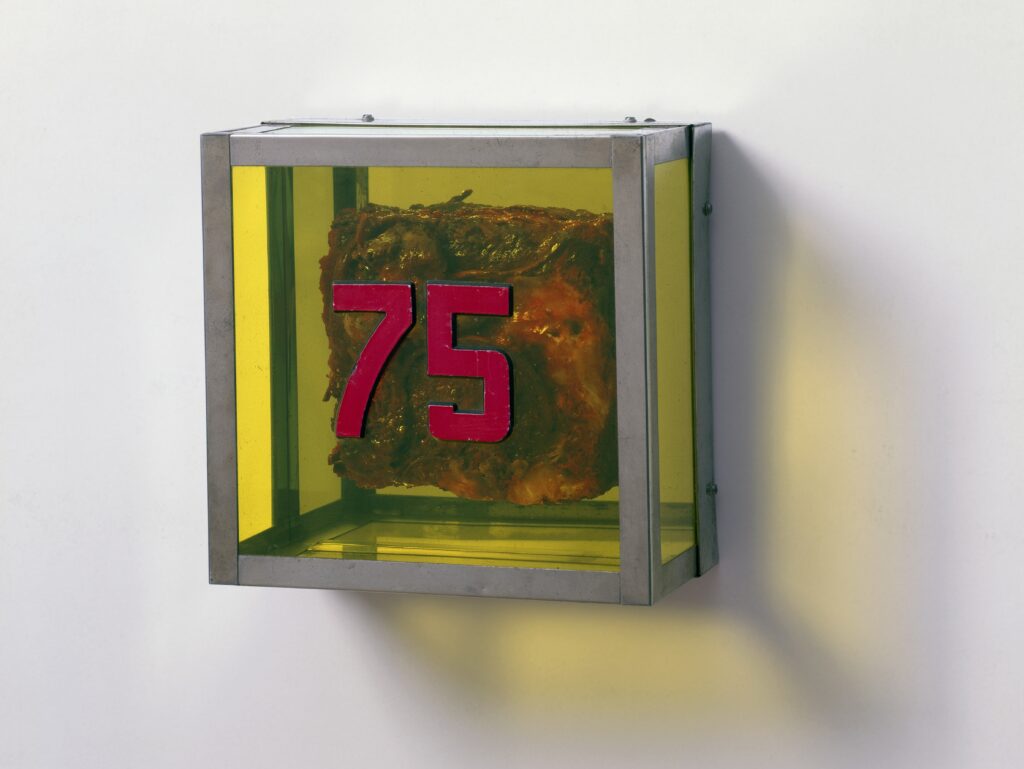
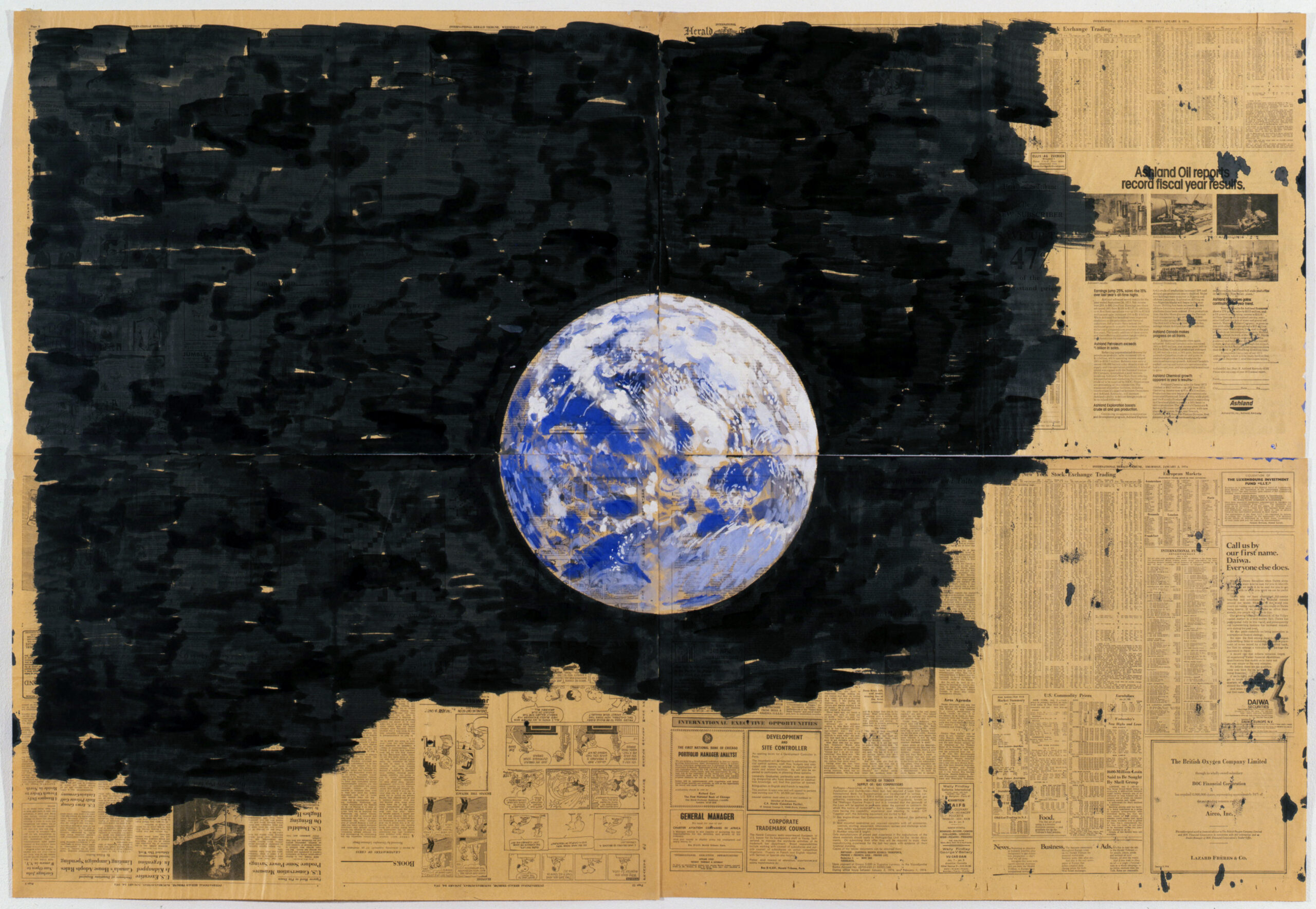
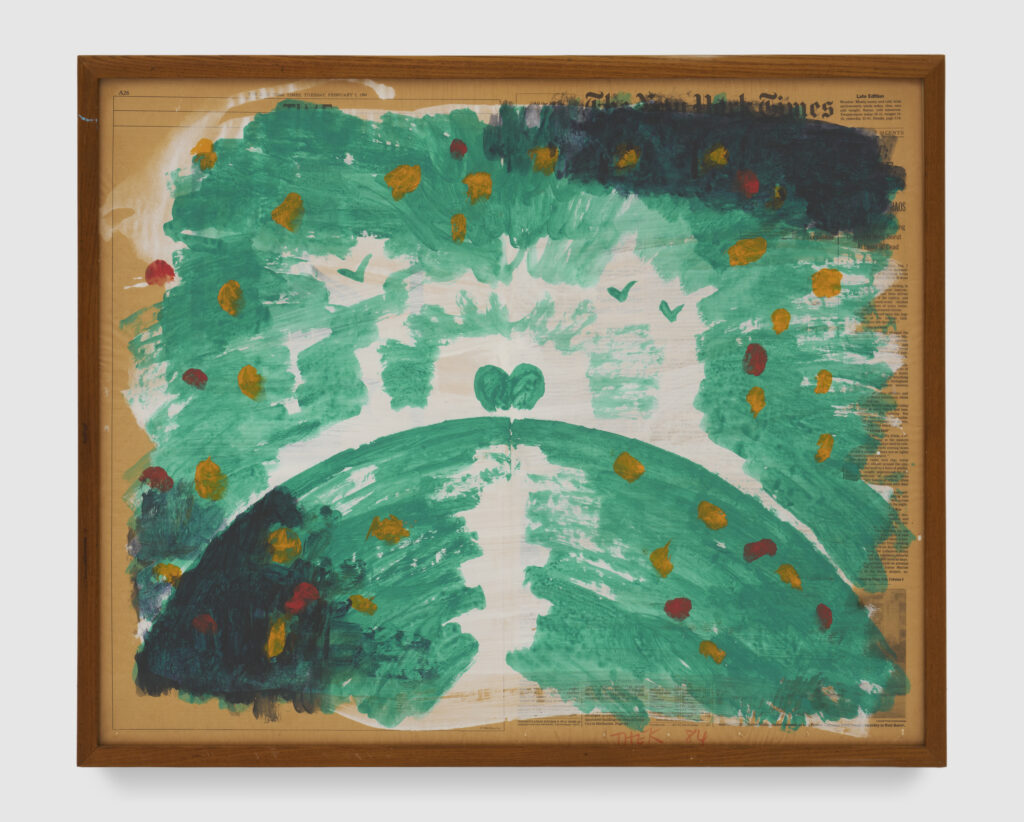
Conversely, Durbin speculates that through Paul’s installations, he sought out the feeling of home, conjuring that which the world failed to give him. Yet these works were by their very nature fleeting, and any sense of belonging they provided never stuck. The Crib, one of Paul’s “time temples,” as he called them—process-based works that were unfinished at the show’s opening and completed only on the final day—was carried out in December 1973 at the Wilhelm Lehmbruck Museum in Duisburg, West Germany. Made of wood, found objects, and newspaper painted over with seascapes and landscapes, flowers and fruit, The Crib consisted of several makeshift rooms. “I want to present an atmosphere—an ambience—which is so peaceful and so beautiful that you’re shattered when you leave,” Paul told writer and curator Richard Flood.
Peter shared Paul’s restlessness but primarily sought to satisfy it within New York’s ever-changing landscape. He seemed resigned to the reality that he belonged to the city, with its fluid cast of outrageously queer characters, among which he could drift in and out as he pleased, seen when he wanted to be and faded into the noise when he didn’t. He spent the first decade of his life on his Ukrainian grandparents’ farm in New Jersey and moved to the city in 1946 following the death of his grandmother; after a few turbulent years with his mother, he set out on his own at the age of 16. Besides summers on Fire Island and dispatches to Coral Gables in 1956 and Italy in 1958 to ’59 and 1962 to ’63, Peter more or less dwelled in the city. But as beguiling and chic as his New York work may be, his portraits of farm animals and scenes from Fire Island gesture to a fierce craving for solitude—save for the presence of Paul and the creatures with whom he had shared a close kinship since his early childhood on his grandparents’ farm.
“The deep bond Paul shared with the ocean,” Durbin observes, “Peter had with animals, especially those on the farm.” He jumped at any chance to drive upstate or anywhere with trees and green—or simply emptiness, for that matter; Peter was “as drawn to the wastelands outlining the cities of the mid-Atlantic as he was to the sparse beauty of Oakleyville,” Durbin notes, and he photographed both with an unquenchable thirst. Peter imbued horses, cows, and birds with the same dignity and complex beauty that mark his portraits of artists and performers, friends and strangers.
During the long, languorous summer days that he spent on Fire Island with Paul throughout the 1960s, when they eschewed the raucousness of areas like Cherry Grove and Ocean Bay Park for a rented house in Oakleyville, the weight that typifies Peter’s oeuvre seems to evaporate. His best-known Fire Island pictures are perhaps his portraits of Paul, but his eye, like Paul’s, was continually drawn to the rough shrubbery, the velvety-silver foliage of dusty miller, the spider-like, unruly beach grass. Fire Island was a world apart from any he had ever known, “naked and unambivalent in its striving for life,” Durbin writes. “The power of the natural world ultimately held a lot of sway over him; he believed pine trees imparted positive energy if you hugged them.” Peter’s love of animals took a different form on Fire Island than in the farm country of New Jersey or upstate: a beached shark, a rotted fish, a butterfly fallen in the sand. No matter the subject, his Fire Island photographs are suffused with light and nostalgia; these pictures “evoke the most private, concentrated feeling of place and people whom he loved,” writes Durbin. “If you have stayed on Fire Island, you may understand something of this feeling, the feeling of living life as if it were an open secret, shared among those you know best and those you don’t know at all.”
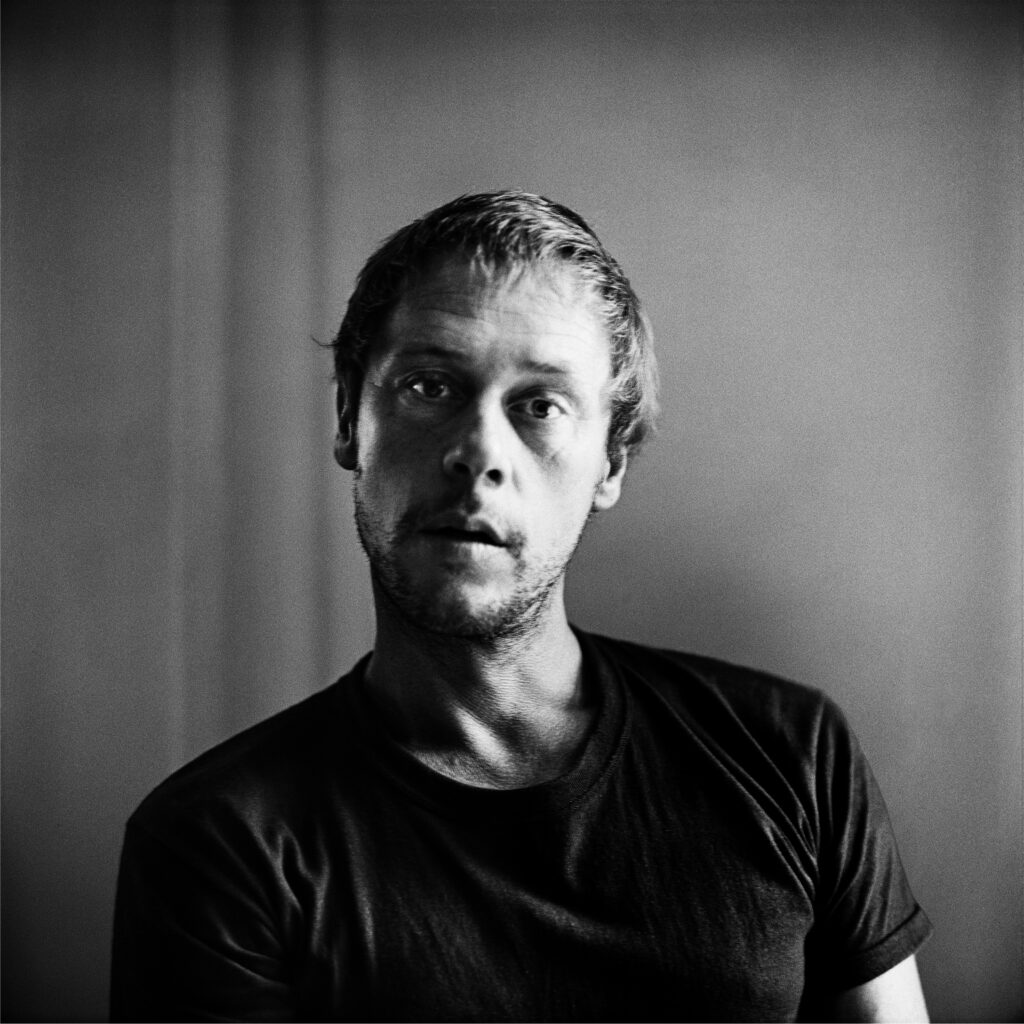
It is Peter and Paul’s friend, artist Ann Wilson, who best sums up the couple’s yin-and-yang nature. The three of them would take long walks during her summer visits. Paul would come home with an armful of colorful shells, half-rotted crab claws, smooth shards of glass; the ever-discerning Peter, meanwhile, would return with just one thing, but it was always the thing.
During these summers, Paul would work upstairs, sculpting, painting, and playing guitar, while Peter traversed the island. Friends and lovers came and went. Peter shot Paul many times—showering behind the house, lounging on a dock, playing in the surf. As in Peter’s other images of Paul, an unbreakable bond and irrepressible desire underpin the Fire Island portraits. “When you look at the contact sheets and prints of Paul in Oakleyville, you feel you have caught sight of something private, nameless,” Durbin reflects. “What to call it? You might just call it love, only it is a love that had experienced so many transformations it eluded neat description; its true shape was known only to them.”
Both loved the sparse, fragile beauty of the wispy barrier island with its sunken holly forest and jewellike black cherries. “‘Mars,’” Paul once called Fire Island, “because it was a wonder anything could survive, let alone flourish, there. … For Paul, such stark adversity conferred upon the landscape almost spiritual meaning.” In Durbin’s impressionistically rendered scenes, Fire Island emerges as something between a conduit and a third lover linking Peter and Paul. Tucked away in the eastern fringes of the Sunken Forest, Peter’s blunt realism seemed to soften, and Paul, for brief snatches of time, found both the transformative potential he’d long sought in the sea and a kindred spirit with which to share it.
“Anyway I love you and what a shame you didn’t get in the box with the butterflies,” Paul wrote in the summer of 1968 in a letter to Peter. (He had asked Peter to send him Menelaus blue morpho butterfly wings sourced from a supplier in Brooklyn.) Paul was in Rome, missing Peter but reluctant to return to New York; Peter was feeling despondent at the thought of renting in Oakleyville alone. It is painful, knowing how the story ends—Peter and Paul died less than a year apart from AIDS-related complications in 1987 and 1988, respectively—to watch two decades of lovers-to-friends-and-back-again antics unfold, culminating in a bitter falling-out from which they never recovered. It is tempting to wish, as Paul implies he did, that Peter had followed Paul on his escapades to the Earth’s far-flung watery edges, or that Paul had settled down in New York with Peter. But Durbin does not attempt to pin them side by side under a pane of glass, flattening their intermingled stories into a single image; nor does he offer a dramatized ending, either to their relationship or to their lives.
As I read the spare epilogue—the only time AIDS is addressed in depth in the 400-page tome—I thought of a talk given by Charlie Porter in Fire Island’s Cherry Grove last summer ahead of the US release of his novel Nova Scotia House. He spoke of his refusal to give in to the sensationalism that often characterizes accounts of lives lost to AIDS in fiction and nonfiction alike. Durbin, likewise, resists the temptation to lionize the artist duo under the specter of AIDS, chronicling the mundane and the ugly (Peter’s temper tantrums, Paul’s lingering Catholic guilt over his sexuality) along with the beauty and the romance.
Maybe it’s that room to breathe that lets my mind wander. I imagine Peter swallows his pride and returns Paul’s phone call (Paul extended an olive branch in his final years). Paul drifts from one remote corner of the world to another but always returns to Peter; Peter lets down his walls enough to let himself be loved. Perhaps this sort of speculation is exactly what Durbin set out to deflect, but I can’t help dream of a world in which the two stubbornly evasive artists found a home in each other.
The intimacy and intensity of the interlacing queer ecosystems with roots running through New York mean that every loss reverberates across cohorts and generations, and there’s a resounding silence where the pair’s remaining decades should be. But Peter’s and Paul’s presence is forever felt on Fire Island—in the monarchs flitting in and out of milkweed in late summer, in the strum of a guitar drifting over the dunes, in a svelte pair of deer grazing on elderberries and violets beneath the thin shade of the pines.








Contribute your thoughts by leaving a reply