







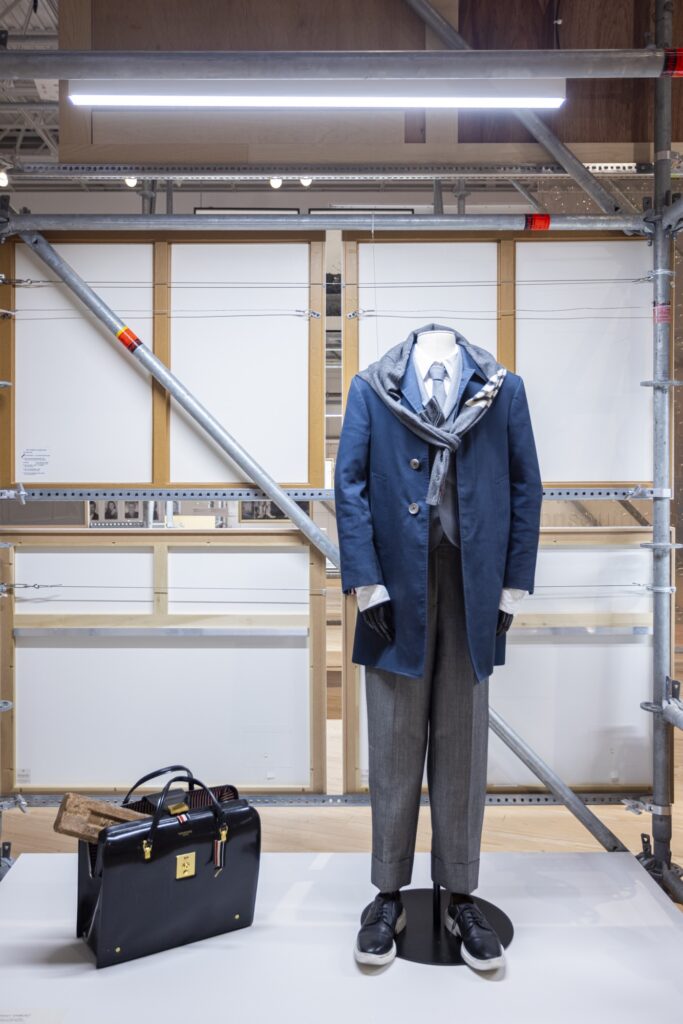
“When I work, I accumulate a great deal of material,” artist Mary Ellen Carroll once remarked, “and I need some way of organizing it.” Their first major museum retrospective, which constitutes over 60 works from across four decades, organizes a great deal of material in two ways. The works themselves, occupying the entire ground floor of Contemporary Arts Museum Houston, are installed on six rows of reusable construction scaffolding designed in collaboration with the architect Juliana Ziebell (the supports for making a work are a part of the work). Each row is titled after one of the index cards in the catalogue that Carroll has long used to categorize and motivate their work.
The material and conceptual scaffolding reflect Carroll’s careerlong interest in furnishing the public with alternatives to state laws and other systems that organize space for us. They selected six groupings—DOUBLING, CLIMATE, POLICY, MEDIA, SOVEREIGNTY, and BEING—and they notably never allow the included material to be reduced to census-like designations of geography or chronology. Instead, Carroll draws inspiration from theorist and historian Aby Warburg’s 1920s Mnemosyne Atlas,which grouped thousands of images from antiquity to the present into clusters that demonstrate the persistent patterning of gestures and symbols across time. Look at what we have in common, Warburg seemed to say. Art is for the public, Carroll seems to add.
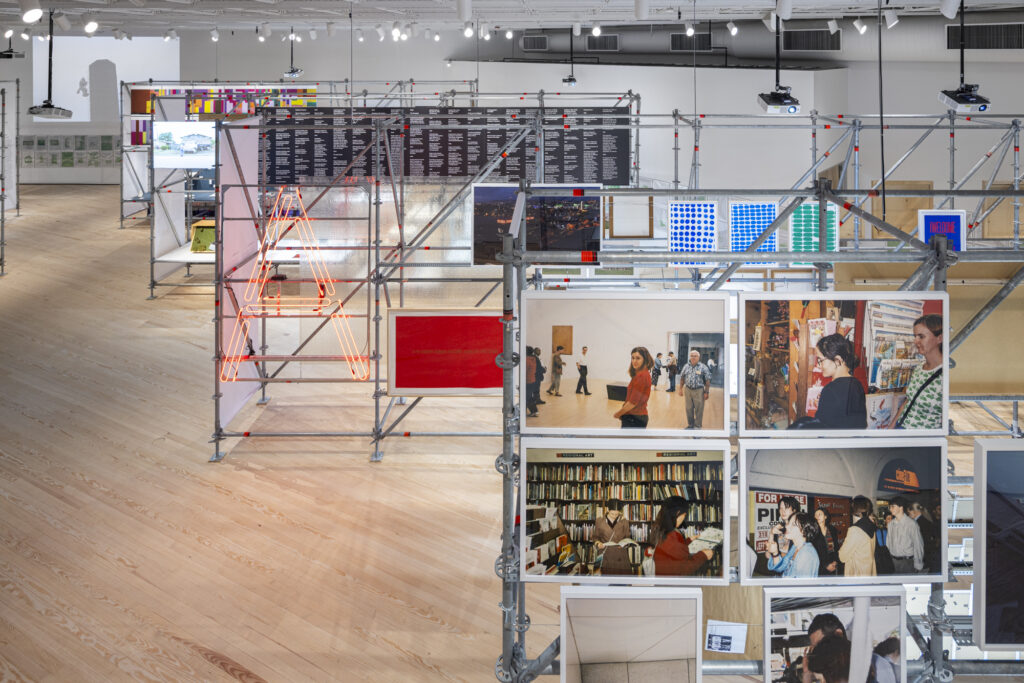
Carroll, whose use of they/them pronouns professionally suggests they consider their artist identity to be a corporate entity, confronts the categories we receive from above, such as those dictated by state bureaucracies, by proposing ground-up alternatives. To make sense of the world, they privilege what queer theorist Eve Sedgwick once called “nonce taxonomies,” designed for everyday use. Their PUBLIC UTILITY 2.0 (2008–present) creates public access to wireless broadband through unused radio frequencies, which are otherwise highly regulated by the Federal Communications Commission. The FCC allocates different frequencies to different categories of use: maritime mobile, radio astronomy, TV broadcasting, etc. Some remain underused and unlicensed, such as those once designated to no-longer-airing television stations. Carroll’s printed atlas of these official categories spans more than a couple dozen feet of the MEDIA row in their retrospective, hung above eye level on the scaffolding and color-coded in blocks like a chart of Pantone swatches. Their aim is to carve out what they call an “electromagnetic commons.”
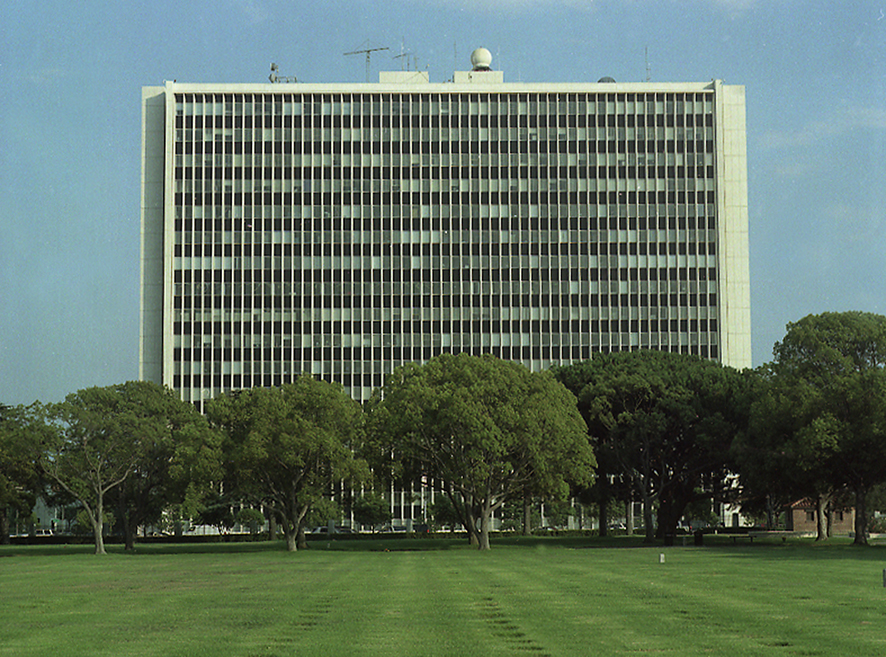
Carroll’s interest in how the commons offers an alternative to state power is best captured in FEDERAL (2003), for which they filmed the Wilshire Federal Building in Los Angeles for 24 hours—a difficult task post-9/11. The exhibition includes documentation of Carroll requesting assistance in gaining the appropriate approvals, including a letter with Senator Hillary Clinton on CC. The occupants of the Federal Building, which included the FBI, surveil people from above, for instance through satellites. But Carroll returns the gaze and surveils it from below, from the street level. Their work is tactical in the sense philosopher Michel de Certeau offers when he describes state designs for structuring space (and we can include the FCC’s categorization of radio electromagnetic space) as a strategic bird’s-eye view of the world. In contrast with such strategies, de Certeau defines tactics—like jaywalking or insider shortcuts—as belonging to everyday people, helping them make pathways through and around the state’s strategic division of the city. Carroll’s work recurringly aims to identify openings for tactical resistance in everyday practices.
One work in the DOUBLING category, Resemblance—Jaywalking (1999), part of the larger Resemblance series, includes photographs Carroll took of people they found doing the same ordinary task Carroll was also doing. The chromogenic print shows the artist and a man crossing a nondescript intersection that could be almost anywhere; the cropping excludes street signs from view. By naming the action, Carroll locates yet another commons in which people are brought together not through sharing the same bureaucratic identities of age or race or gender or ethnicity, but through sharing an affinity for everyday life.
Resemblance in turn reframes other works from the ongoing Doppelgänger project, which began in the 1980s and was especially important for Carroll’s career in the early 2000s, including multiple works in which a stranger was auditioned and cast to imitate them, perhaps most notoriously performing “Mary Ellen Carroll” at the annual conference of the College Art Association. All the men who think they can be me (2003), for instance, constitutes more than 60 black-and-white headshots of people who responded to an ad calling for men who thought they resembled Carroll. These works of mimeticism are often understood through art historical rubrics of repetition: an exploration of copies and originals in an age when people, as much as objects, are mass-produced. But Carroll might be better understood here not to be offering themself as an original to be copied but as a category to be populated with additional examples, like Warburg looking for commonalities across time.
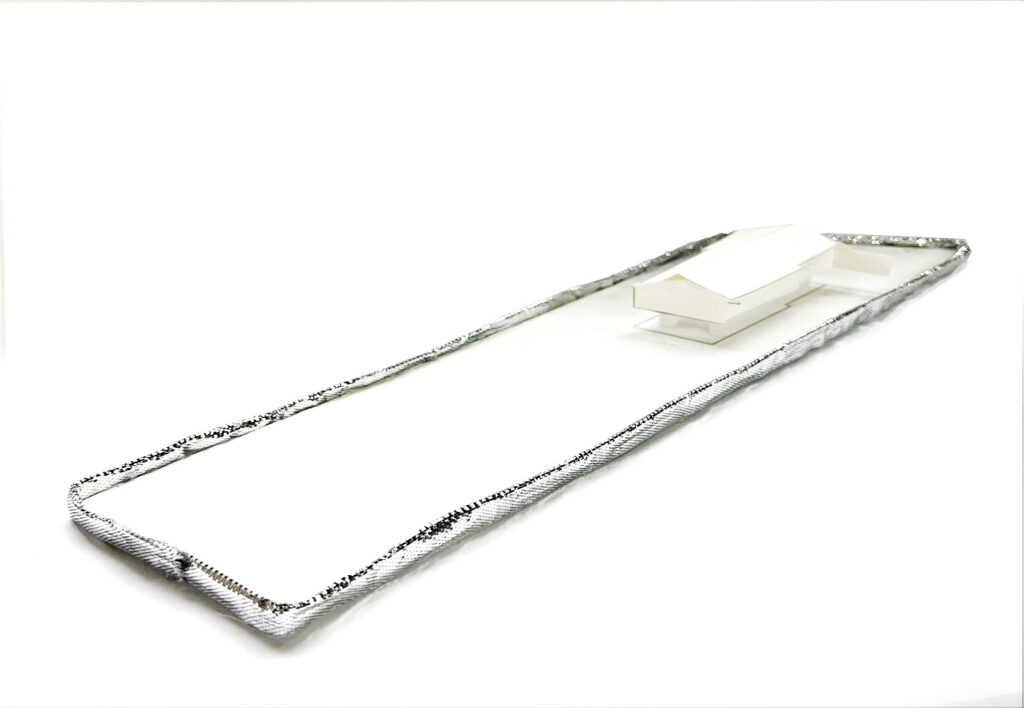
Carroll’s most famous work, prototype 180 (1999–ongoing), treats lack of zoning laws in Houston as material. Carroll wanted, according to an original note of inspiration, “to treat policy as a readymade.” Another work that began as an idea on an index card, prototype 180 has involved the scouting, purchasing, and manipulation of an abandoned house in the master-planned subdivision of Sharpstown. In 2010, they raised and rotated the entire house 180 degrees. Included in the exhibit are a number of photographs and a video documenting this massive endeavor, with brittle bricks and paint-stripped wooden panels barely holding together as the house is lifted, rotated, and resituated. In 2017, following an insurance inspector’s claim that Hurricane Harvey had left the house worthless, Carroll carefully deconstructed the house before a live audience, wearing a suit while operating a Caterpillar excavator.
Like the excavations of an archaeologist, Caroll was not so much destroying as revealing. Lack of zoning had long allowed industry and domesticity to sit uncomfortably close to each other; it could allow art to intervene into Houston’s urban space, too. In a 2009 CAMH exhibition, No Zoning: Artists Engage Houston, Carroll contributed a reproduction of the living room from prototype 180 and used it as a stage to moderate a panel of mayoral candidates discussing their views on land use. Indeed, Carroll’s first careerlong survey could not really be mounted in a city other than Houston, where they have occasionally lived and whose topography they have long engaged, even teaching a seminar titled NOZONE at Rice University’s School of Architecture.
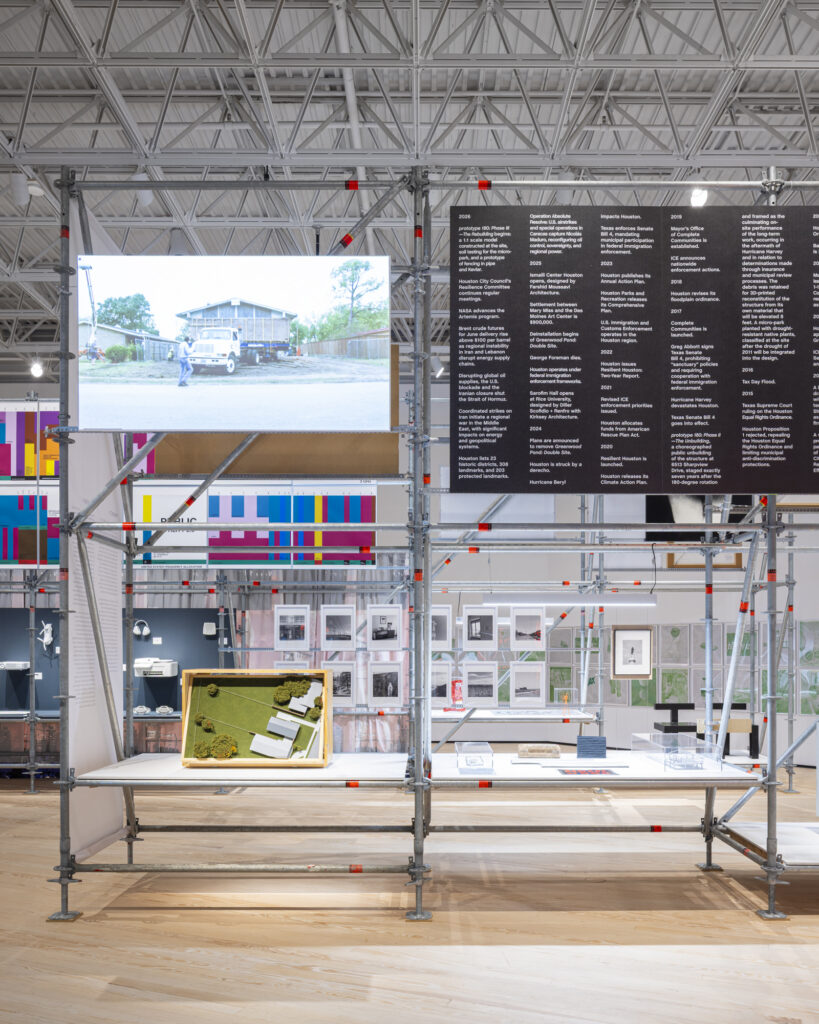
After the house had been rotated, Carroll collaborated with botanists to classify all the plants on the apparently abandoned plot. Photographs show ungroomed grass peeking up over patches of barren dirt. From the state’s strategic perspective, this house was dead, and these plants were weeds. But from a tactical perspective, Carroll’s work of classification cultivates and promotes life in an age of immigration crackdowns and expansive policing. It encourages us to wonder what other forms of life and action that the state tries to weed out we might try to support.
Cognitive scientists have found that our minds naturally classify objects more like jaywalkers than city planners. In line with Carroll’s own language for prototype 180, Eleanor Rosch’s prototype theory holds that we form categories not through definitions but through pointing to the best examples: a couch, say, rather than a credenza, for the category of “furniture.” And, tactically, picking better examples can in turn transform and expand categories—compare “as American as apple pie” with, say, “as American as tres leches.”
Carroll is always looking for better prototypes for our shared categories, including the ultimate category of the commons—all the resources and culture that belong, or ought to belong, to the public. Carroll’s work invites us to protect this shared realm from the enclosures of the state. Like the jaywalkers photographed in the Resemblance series, we may not have anything in common with one another besides this everyday action. But that action is ours, and it is why we must share the project of protecting the commons all the more.










Contribute your thoughts by leaving a reply