








Sometime that feels pretty recent, the internet turned into an actual talent show. Social media always felt performative, and now, with TikTok ascendant and Facebook/Instagram “challenges” rampant, that tendency has finally bloomed into a moral imperative to perform vaudeville. The goofy exuberance our forebears reserved for close friends and small children has become a tacit requirement for participation in public life.
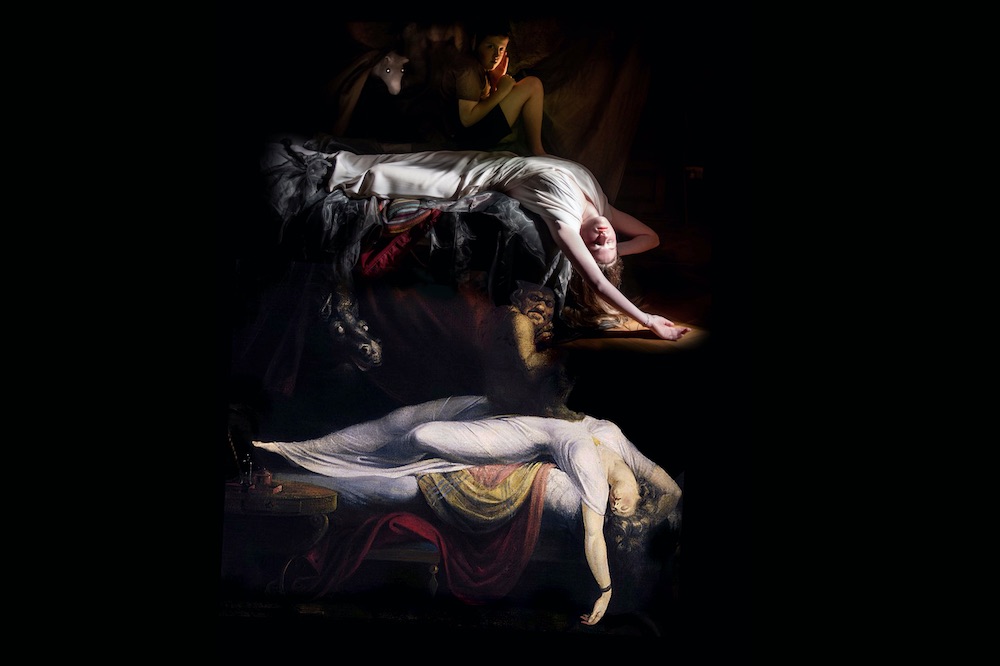
Lately, the algorithmically-enhanced showmanship has turned its hungry thespian gaze to art history, thanks to the stress-laced indolence provided by COVID-19. Since the Getty Museum in Los Angeles challenged its Twitter followers on March 25 to recreate their favorite artworks with household items, many thousands of people have gone to astonishing lengths to style themselves after paintings.
Overall, it makes for satisfying scrolling. Ignore the Girl with a Pearl Earring’s fervid online following, and you’ll find many compositions that are obscurely revealing, charmingly underwhelming, undeniably fun, weirdly accurate, and simply good. As a teenager I spent a concerted afternoon trying to teach hummingbirds to drink sugar water directly from my open mouth, by painting my face red and dressing as a flower. The best of the #GettyChallenge submissions make me happy like that did.
I can’t criticize so much benign play, but something feels unintentionally sad about it. The first entry I came across was a recreation of Goya’s Saturn Devouring His Own Son with a teenager eating a chocolate bar. I hadn’t yet heard about the viral challenge, and the apparent randomness of the image made me laugh. When I saw the Black Paintings at the Prado in 2018, they did not make me laugh. Originally painted on the walls of the country home the artist occupied in his last years of life, the works are terrifying and surreal because they are honest about harm and hate. No one is more wide-eyed than old Goya in his shadows; no one has flinched less.
After miles of saints and aristocrats at the Prado, encountering Goya’s evil visions was the most cathartic moment I’ve had with art. I couldn’t track down the first recreation of Saturn Devouring His Own Son that I spotted a few weeks ago online, but there’s another that shows up in the coverage, of a wild-haired man pulling red cloth from the neck of a headless doll with his teeth. The juxtaposition epitomizes our current moment: a horrifying emotion, side by side with its kitschy echo. I know we all need to cope in our own way, but this cannibalistic spectacle isn’t doing me any favors. Have your fun with Picasso, but don’t anesthetize the darkness. Leave Goya alone. We still need him.









Join the conversation